Uniontown Downtown Historic District

Why it's listed
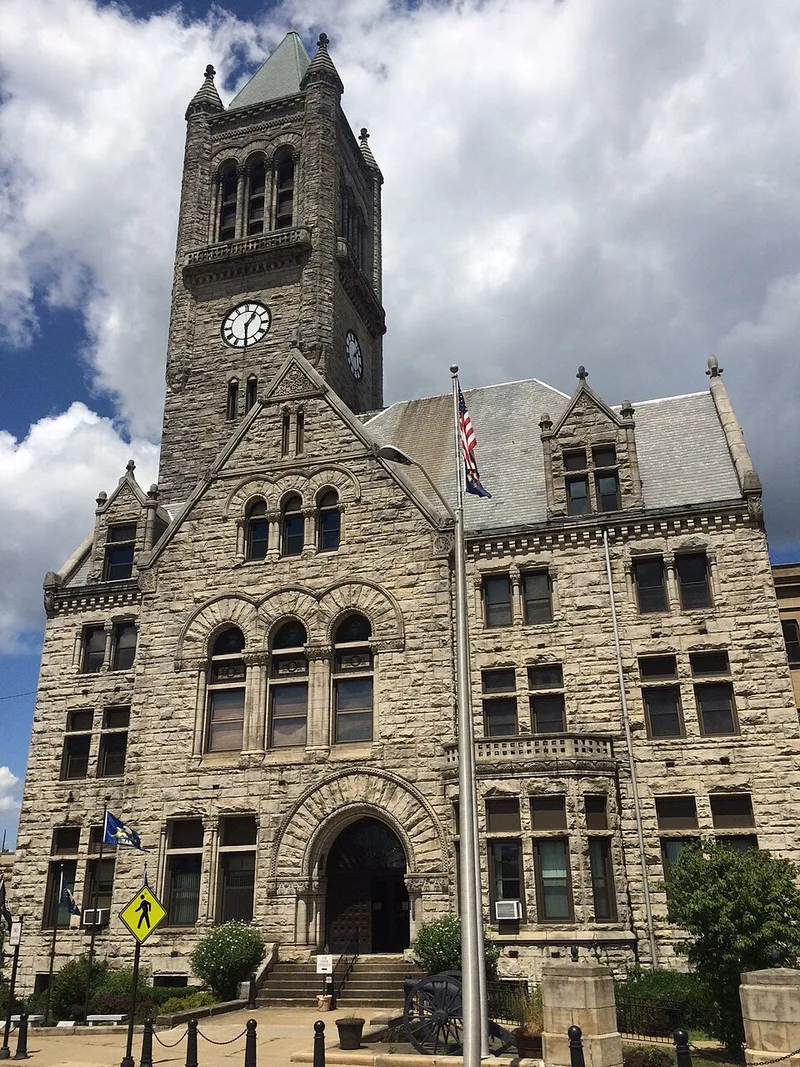
Uniontown's downtown historic district occupies the core of the city's old commercial area in southwestern Pennsylvania, with about 133 buildings along Main, Morgantown and Gallatin streets. The earliest surviving buildings date from the National Road period between 1811 and 1860, when the road brought stagecoach traffic and taverns to the town. A boom in coal and coke from about 1880 produced most of the district's ornate commercial, banking and public buildings. The eleven-story Fayette Bank Building, completed in 1902 by Daniel H. Burnham and Company for coal land speculator J. V. Thompson, uses a steel frame and a circular banking corner. The Fayette County Courthouse, finished in 1892 in Richardsonian Romanesque style by Edward M. Butz and William Kaufmann, has a 188-foot clock tower and gray sandstone walls. The district is listed for its architecture and for its ties to transportation and the county's mining economy.
Machine-generated summary. This summary was generated by a language model from the official nomination document and has not been reviewed line by line by an editor. It may contain errors. Check the source document before relying on any detail. Source: nomination document (PDF) · catalog entry. Generated October 2026 (model claude-haiku-5-5, prompt v1.1-2026-10-29).
| Period of significance | 1811-1939 |
|---|---|
| Styles | Renaissance Revival, Neo-Classical Revival, Federal, Romanesque, Queen Anne |
| Areas of significance | Commerce, Transportation, Politics/Government, Architecture |
| Acreage | 31 |
| Boundary source | NPS cultural-resource GIS polygon |
| Full listing page | Uniontown Downtown Historic District (property record) |
What listing means for this property
This is a historic district. Buildings within its boundary are either contributing (they add to the district's significance) or non-contributing. Owners of contributing income-producing buildings can claim the 20% federal rehabilitation tax credit; homeowners should look at state credits. National Register districts impose no design review by themselves; a local historic district ordinance, if one exists, does (the difference explained).
General information, not legal or tax advice. Rules change; confirm with your State Historic Preservation Office or a qualified adviser.