Tyler, John J., Arboretum

Why it's listed
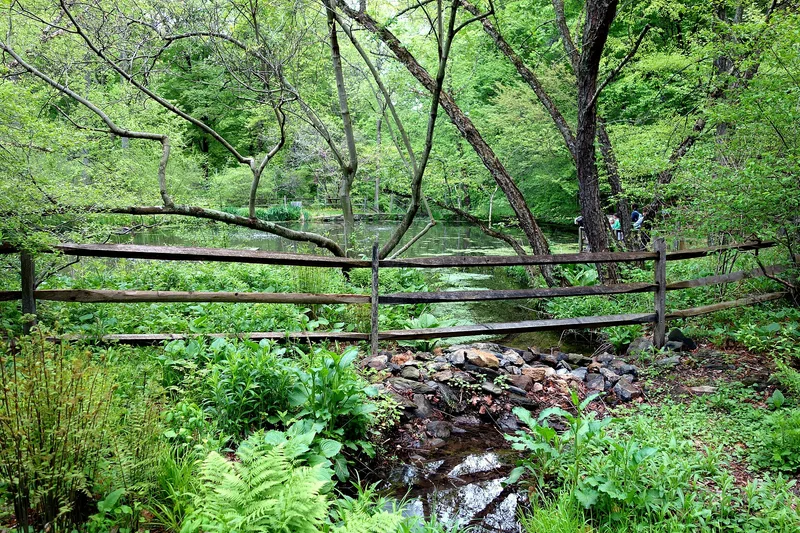
Home Farm, in Lima, Delaware County, is a farmstead whose buildings date from 1738 onward and whose surrounding grounds hold the John J. Tyler Arboretum. Thomas Minshall built the first section of Lachford Hall in 1738, and the Painter family, beginning with Enos Painter and his sons Minshall and Jacob, expanded the farm through the nineteenth century. Minshall and Jacob Painter planted a collection that at one time numbered over 1,100 trees between 1830 and 1860, including exotic species that did not survive the climate. Twenty-two Painter trees survive, including a giant sequoia and a Cedar of Lebanon believed to be the largest of their kind in the state. The district is regarded as significant for conservation of horticultural specimens, for its link to the Painters' scientific pursuits, and for its largely intact eighteenth- and nineteenth-century farm buildings, which include stone barns, springhouses, a root cellar and the Painter Library of 1863.
Machine-generated summary. This summary was generated by a language model from the official nomination document and has not been reviewed line by line by an editor. It may contain errors. Check the source document before relying on any detail. Source: nomination document (PDF) · catalog entry. Generated October 2026 (model claude-haiku-5-5, prompt v1.1-2026-10-29).
| Period of significance | circa 1710 - 1952 |
|---|---|
| Styles | Georgian; Georgian Revival; Gothic Revival; Colonial Revival |
| Areas of significance | Conservation, Architecture, Science |
| Acreage | 657 |
| Boundary source | NPS cultural-resource GIS polygon |
| Full listing page | Tyler, John J., Arboretum (property record) |
What listing means for this property
This is a historic district. Buildings within its boundary are either contributing (they add to the district's significance) or non-contributing. Owners of contributing income-producing buildings can claim the 20% federal rehabilitation tax credit; homeowners should look at state credits. National Register districts impose no design review by themselves; a local historic district ordinance, if one exists, does (the difference explained).
General information, not legal or tax advice. Rules change; confirm with your State Historic Preservation Office or a qualified adviser.