Tulpehocken Station Historic District

Why it's listed
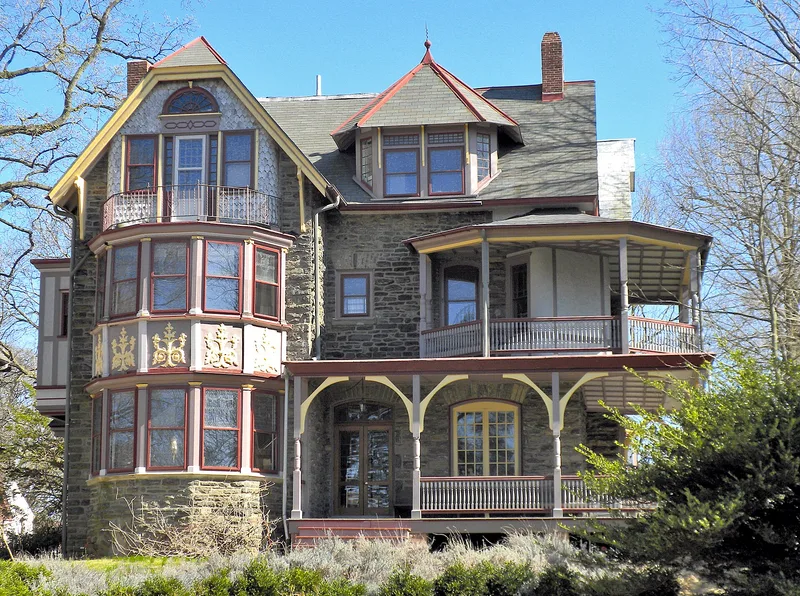
Germantown's Tulpehocken Station District is a residential district of about thirteen blocks west of Germantown Avenue, laid out on former farmland that was divided into building lots beginning in the 1850s. Its houses range from Gothic cottages and Italianate villas to Norman Gothic castles and Second Empire twins, reflecting roughly seventy years of suburban building. Fallon, Hamm, Atherton and Maxwell were among the early developers, and the Queen's house at 9 Tulpehocken Street, built in 1851, was among the first structures. The district is regarded as one of Philadelphia's first garden suburbs and a clear application of Andrew Jackson Downing's ideas on harmony between houses and gardens. Its growth was linked to the Philadelphia, Germantown and Norristown rail line and to the Tulpehocken station opened in 1884. Architects including George W. Hewitt, Frank Miles Day and Cope and Stewardson also worked here. Many original houses, outbuildings and tree-lined streets survive largely intact.
Machine-generated summary. This summary was generated by a language model from the official nomination document and has not been reviewed line by line by an editor. It may contain errors. Check the source document before relying on any detail. Source: nomination document (PDF) · catalog entry. Generated October 2026 (model claude-haiku-5-5, prompt v1.1-2026-10-29).
| Period of significance | 1851-1925 |
|---|---|
| Styles | Carpenter Gothic, Queen Anne, Italianate, Second Empire, Gothic Revival, Colonial and Georgian Revival, Shingle, Tudor Revival, Spanish and other Picturesque-movement styles |
| Areas of significance | Community Planning and Development, Landscape Architecture, Transportation, Architecture |
| Acreage | 80 |
| Boundary source | NPS cultural-resource GIS polygon |
| Full listing page | Tulpehocken Station Historic District (property record) |
What listing means for this property
This is a historic district. Buildings within its boundary are either contributing (they add to the district's significance) or non-contributing. Owners of contributing income-producing buildings can claim the 20% federal rehabilitation tax credit; homeowners should look at state credits. National Register districts impose no design review by themselves; a local historic district ordinance, if one exists, does (the difference explained).
General information, not legal or tax advice. Rules change; confirm with your State Historic Preservation Office or a qualified adviser.