Todd, John, House

The National Park Service has not published a boundary polygon for this district; the map shows the listed properties inside it and the district's reference point.
Why it's listed
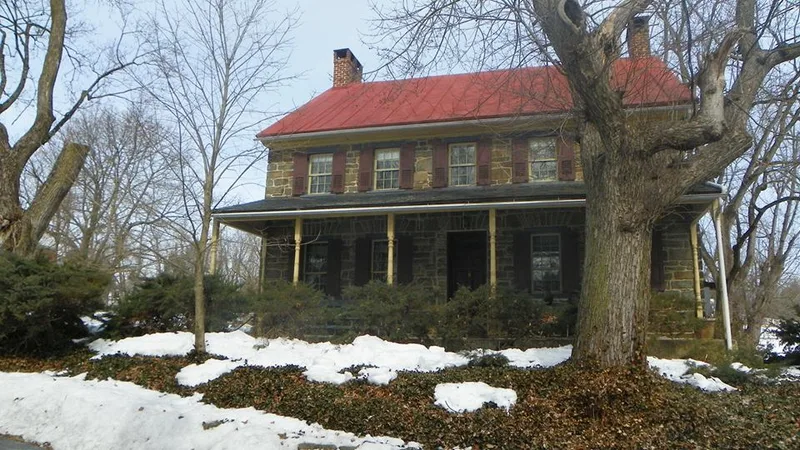
Built of uncoursed rubble stone around 1772 on a farm in East Hanover Township, Dauphin County, the John Todd house is a five-bay Georgian dwelling with stone quoins, a side-gabled roof, and stone flat arches over its lower windows and door transom. John Todd, born in 1742, acquired the 190-acre property in 1771. The house was damaged by fire in the late 1700s and rebuilt soon after, and its interior retains early raised six-panel doors, hard pine floors, and several fireplaces, including a large walk-in kitchen fireplace. A stove plate dated 1759 was found in the dining room. The nomination regards the house as a rare surviving example of early stone dwellings built by the Scots-Irish settlers of Hanover Township, and as a well-preserved vernacular interpretation of Georgian design. Nearby, a brick summer house built during German ownership in the 1830s is also part of the property's story.
Machine-generated summary. This summary was generated by a language model from the official nomination document and has not been reviewed line by line by an editor. It may contain errors. Check the source document before relying on any detail. Source: nomination document (PDF) · catalog entry. Generated October 2026 (model claude-haiku-5-5, prompt v1.1-2026-10-29).
| Period of significance | 1771-1832 |
|---|---|
| Styles | Colonial---Georgian |
| Areas of significance | Architecture |
| Acreage | 6.5 |
| Boundary source | not published |
| Full listing page | Todd, John, House (property record) |
What listing means for this property
This is a historic district. Buildings within its boundary are either contributing (they add to the district's significance) or non-contributing. Owners of contributing income-producing buildings can claim the 20% federal rehabilitation tax credit; homeowners should look at state credits. National Register districts impose no design review by themselves; a local historic district ordinance, if one exists, does (the difference explained).
General information, not legal or tax advice. Rules change; confirm with your State Historic Preservation Office or a qualified adviser.