Thornburg Historic District

Why it's listed
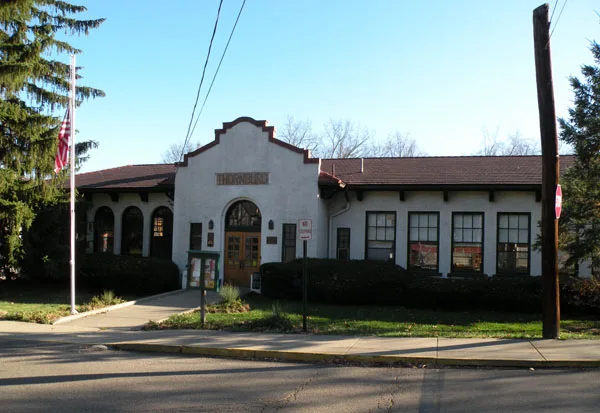
Thornburg is a planned residential district of roughly 75 buildings on a terraced bluff above Chartiers Creek, southwest of Pittsburgh. Development began in 1900, when Frank Thornburg had five homes built along Princeton Road, and the community was incorporated as a borough in 1909. Of the buildings, 63 date from 1900 to 1919, mostly one and one-half to two story bungalow-type houses built of fieldstone and framed with exposed rafters. Developers required each home to cost at least $2,500 and to have a masonry first floor for fire safety. The district's most prominent houses include the 1906 Mathews/Fleck house on Stanford Road, modeled on the Morris-Jumel mansion in New York City, and the Shingle Style Thornburg/Haller house on Lehigh Road. Its 1910 school, designed by Press C. Dowler, later served as a community center. The district is regarded as a clear example of early suburban planning in the Pittsburgh area, with its architecture and landscape largely unchanged.
Machine-generated summary. This summary was generated by a language model from the official nomination document and has not been reviewed line by line by an editor. It may contain errors. Check the source document before relying on any detail. Source: nomination document (PDF) · catalog entry. Generated October 2026 (model claude-haiku-5-5, prompt v1.1-2026-10-29).
| Period of significance | 1900-1932 |
|---|---|
| Styles | Bungalow or Shingle Style, with Craftsman, Mission, Queen Anne, Colonial Revival and Tudor Revival examples |
| Areas of significance | Community Planning and Development, Architecture |
| Acreage | 48 |
| Boundary source | NPS cultural-resource GIS polygon |
| Full listing page | Thornburg Historic District (property record) |
What listing means for this property
This is a historic district. Buildings within its boundary are either contributing (they add to the district's significance) or non-contributing. Owners of contributing income-producing buildings can claim the 20% federal rehabilitation tax credit; homeowners should look at state credits. National Register districts impose no design review by themselves; a local historic district ordinance, if one exists, does (the difference explained).
General information, not legal or tax advice. Rules change; confirm with your State Historic Preservation Office or a qualified adviser.