Swatara Furnace

Why it's listed
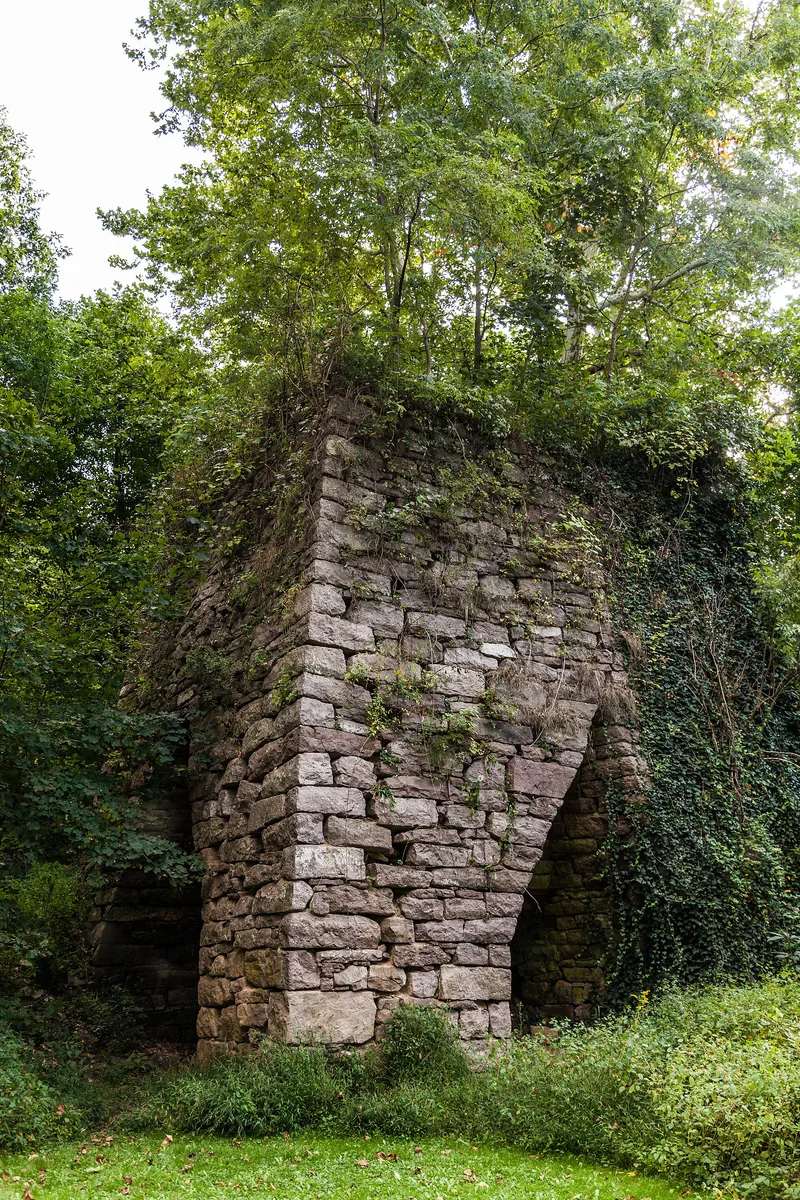
Built around 1830 by Dr. George N. Eckert and Simon Guilford, Swatara Furnace is an iron plantation on Mill Creek in Pine Grove Township, Schuylkill County. The complex included a limestone furnace, a stone dam breast, an ironmaster's mansion whose stone western section dates to 1830 and whose eastern section was added around 1860, a barn, a foreman's house and a double worker's house. Ore and limestone reached the site by the Union Canal, and the works made stoves and iron chain. A flood around 1860 is the most likely cause of the operation's end, though accounts differ on the dates. The furnace stack and its wheel pit survive well and show the construction of a nineteenth-century iron furnace. The mansion illustrates the gradual enlargement of a house over several decades. Mahlon Boyer acquired the property in 1881, and his descendants still own the mansion, which operates as a bed and breakfast.
Machine-generated summary. This summary was generated by a language model from the official nomination document and has not been reviewed line by line by an editor. It may contain errors. Check the source document before relying on any detail. Source: nomination document (PDF) · catalog entry. Generated October 2026 (model claude-haiku-5-5, prompt v1.1-2026-10-29).
| Period of significance | 1830-1860 |
|---|---|
| Areas of significance | Industry, Engineering, Architecture |
| Acreage | 20 |
| Boundary source | NPS cultural-resource GIS polygon |
| Full listing page | Swatara Furnace (property record) |
What listing means for this property
This is a historic district. Buildings within its boundary are either contributing (they add to the district's significance) or non-contributing. Owners of contributing income-producing buildings can claim the 20% federal rehabilitation tax credit; homeowners should look at state credits. National Register districts impose no design review by themselves; a local historic district ordinance, if one exists, does (the difference explained).
General information, not legal or tax advice. Rules change; confirm with your State Historic Preservation Office or a qualified adviser.