Sugartown Historic District

Why it's listed
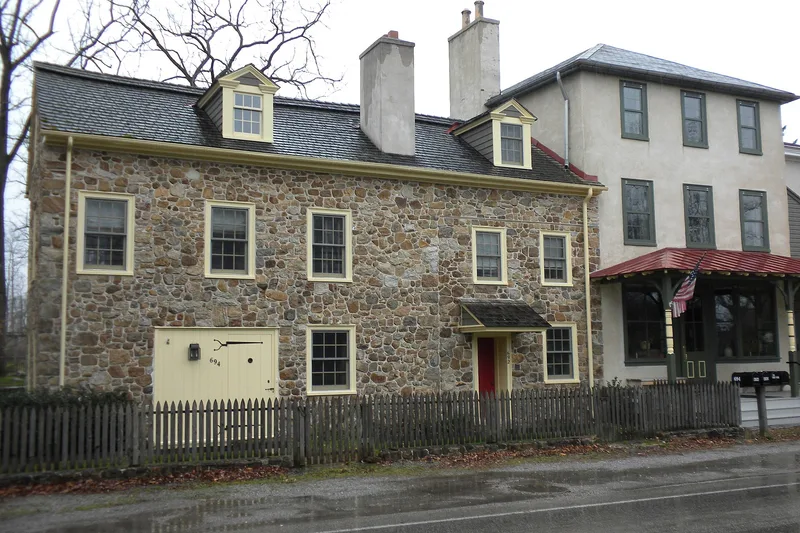
Sugartown is a crossroads village of about fourteen principal buildings in Willistown Township, Chester County, where five roads meet on a slight plateau. Its core dates from about 1790, when it grew into a service center for surrounding farms and travelers. The Sign of the Spread Eagle, an inn first licensed in 1801, served drovers and farmers, and the Sugartown Store, a combined house and store, later housed the post office and an Odd Fellows hall. The Goshen Monthly Meeting built a Quaker schoolhouse in 1783 and a schoolmaster's house by 1785, following Philadelphia Yearly Meeting guidance, and this educational complex is regarded as rare. The village also served as the township's unofficial seat of government, and in 1909 Charles E. Coxe funded a municipal building there. Its survival with little change through most of the twentieth century gives it its significance.
Machine-generated summary. This summary was generated by a language model from the official nomination document and has not been reviewed line by line by an editor. It may contain errors. Check the source document before relying on any detail. Source: nomination document (PDF) · catalog entry. Generated October 2026 (model claude-haiku-5-5, prompt v1.1-2026-10-29).
| Period of significance | 1790-1890 |
|---|---|
| Styles | Colonial style; hall/parlor and Penn Plan types; Classical Revival; American Bracketed; American Foursquare |
| Areas of significance | Commerce, Education, Politics/Government, Architecture |
| Acreage | 39 |
| Boundary source | NPS cultural-resource GIS polygon |
| Full listing page | Sugartown Historic District (property record) |
What listing means for this property
This is a historic district. Buildings within its boundary are either contributing (they add to the district's significance) or non-contributing. Owners of contributing income-producing buildings can claim the 20% federal rehabilitation tax credit; homeowners should look at state credits. National Register districts impose no design review by themselves; a local historic district ordinance, if one exists, does (the difference explained).
General information, not legal or tax advice. Rules change; confirm with your State Historic Preservation Office or a qualified adviser.