St. Peters Village Historic District

Why it's listed
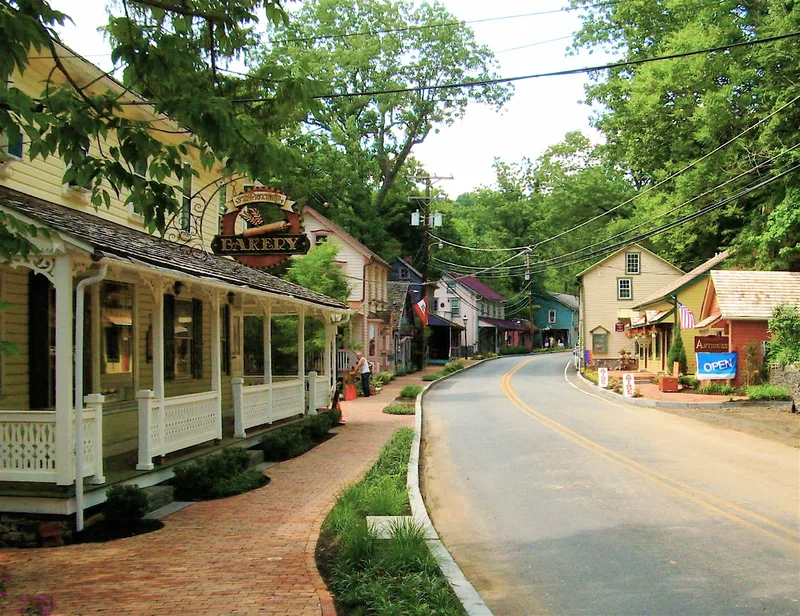
Along St. Peters Road at the Falls of French Creek in Warwick Township, a narrow ravine village grew around an 1845 iron mine and an 1880 granite quarry opened by Davis Knauer. Company-built frame and stone houses, a general store, a bakery, and a hotel called Excursion House line the road within a short walk of the mines and quarry. The village is regarded as an intact example of a rural industrial workplace with housing arranged around it, with few alterations to its buildings. Knauer's French Creek Black Granite was first sold for curbstone and Belgian paving blocks in Philadelphia, and later for memorial stones. During the 1940s the stone was used to make precision surface plates for measuring instruments. The district is significant for its industrial history and for its late Victorian domestic architecture, which shows a unified design across its workers' houses.
Machine-generated summary. This summary was generated by a language model from the official nomination document and has not been reviewed line by line by an editor. It may contain errors. Check the source document before relying on any detail. Source: nomination document (PDF) · catalog entry. Generated October 2026 (model claude-haiku-5-5, prompt v1.1-2026-10-29).
| Period of significance | 1845-1953 |
|---|---|
| Styles | LATE VICTORIAN |
| Areas of significance | Industry, Architecture |
| Acreage | 70 |
| Boundary source | NPS cultural-resource GIS polygon |
| Full listing page | St. Peters Village Historic District (property record) |
What listing means for this property
This is a historic district. Buildings within its boundary are either contributing (they add to the district's significance) or non-contributing. Owners of contributing income-producing buildings can claim the 20% federal rehabilitation tax credit; homeowners should look at state credits. National Register districts impose no design review by themselves; a local historic district ordinance, if one exists, does (the difference explained).
General information, not legal or tax advice. Rules change; confirm with your State Historic Preservation Office or a qualified adviser.