Springton Manor Farm

Why it's listed
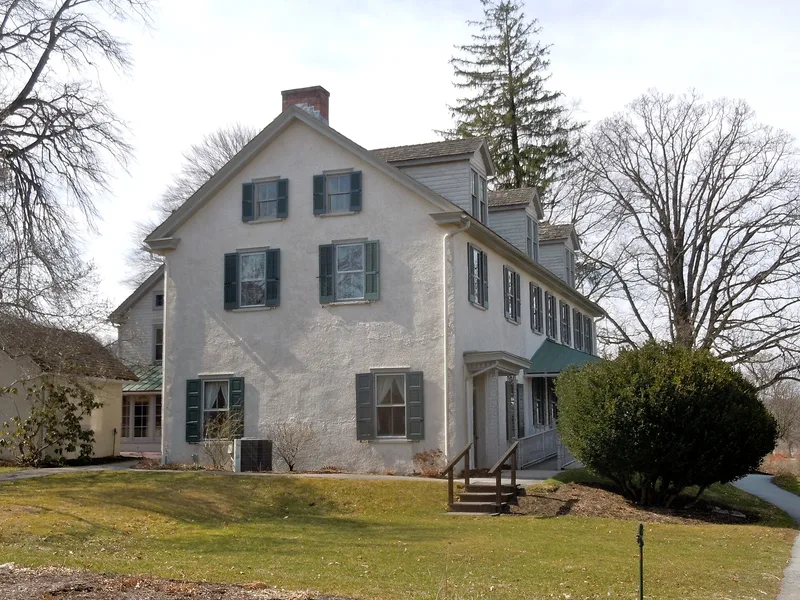
A 260-acre working farm in Wallace Township, near Glenmoore in Chester County, Pennsylvania, with a manor house, stone and frame barns and more than fifteen outbuildings. Its land was part of a 1742 survey for Robert McConaghey, who built the stone field fences that still enclose the fields. The farm has been worked continuously since the early 1700s. Its buildings range from a stone leanto dated 1711 and the Rose Cottage addition of about 1745 to a Federal-period core of about 1836 that George E. Bartol expanded in 1887 in Queen Anne style. Wilson Eyre and McIlvaine carried out further alterations in 1912. The stone bank barn, dated to about 1750, is the largest surviving on the property. Abraham R. McIlvaine, owner in the 1830s, served in the Pennsylvania House and in Congress. The Bartol family preserved old roses, boxwoods and twin white oaks. The farm is regarded as an intact resource for studying agricultural history in eastern Pennsylvania.
Machine-generated summary. This summary was generated by a language model from the official nomination document and has not been reviewed line by line by an editor. It may contain errors. Check the source document before relying on any detail. Source: nomination document (PDF) · catalog entry. Generated October 2026 (model claude-haiku-5-5, prompt v1.1-2026-10-29).
| Styles | Federal (manor house core, c. 1836); Georgian (Rose Cottage addition, c. 1745, and 1912 main entrance of east wing); Queen Anne (1887 alterations) |
|---|---|
| Areas of significance | Conservation, Exploration/Settlement, Politics/Government, Architecture |
| Acreage | 260.5 |
| Boundary source | NPS cultural-resource GIS polygon |
| Full listing page | Springton Manor Farm (property record) |
What listing means for this property
This is a historic district. Buildings within its boundary are either contributing (they add to the district's significance) or non-contributing. Owners of contributing income-producing buildings can claim the 20% federal rehabilitation tax credit; homeowners should look at state credits. National Register districts impose no design review by themselves; a local historic district ordinance, if one exists, does (the difference explained).
General information, not legal or tax advice. Rules change; confirm with your State Historic Preservation Office or a qualified adviser.