Springdale Historic District

Why it's listed
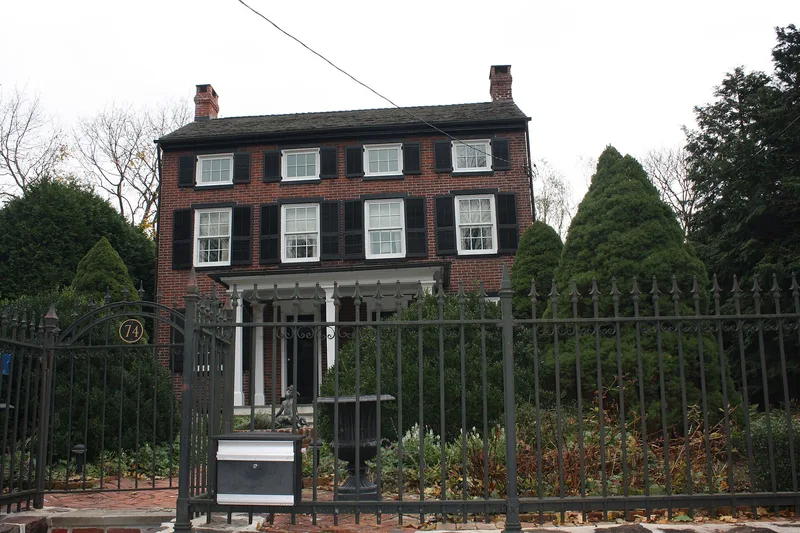
Set along Old York Road and Ingham Creek on the western edge of New Hope Borough, this district grew from a late 18th-century grist mill complex into a small rural industrial settlement. William Maris built a stone cotton mill there in 1820, and it was later converted to silk production in the late 19th century. Most of the roughly 29 properties are simple workers' houses of stone, stucco or frame built between about 1820 and 1880. The Huffnagle-Hood Mansion incorporates the Robert Heath House, and in 1856 Charles Huffnagle added a ballroom and library designed by Philadelphia architect Samuel Sloan. The Conrad Hartman Store, dating to about 1820, and the Magill House, built about 1790 in the Federal style, are among the older survivors. The district's layout reflects a reversal of the usual pattern, with owners' houses nearest the mills. It is valued as a well-preserved example of a mid-19th-century rural industrial village.
Machine-generated summary. This summary was generated by a language model from the official nomination document and has not been reviewed line by line by an editor. It may contain errors. Check the source document before relying on any detail. Source: nomination document (PDF) · catalog entry. Generated October 2026 (model claude-haiku-5-5, prompt v1.1-2026-10-29).
| Period of significance | 1755-1880 |
|---|---|
| Styles | Federal; Italianate influenced; vernacular |
| Areas of significance | Industry, Architecture |
| Acreage | 25.3 |
| Boundary source | NPS cultural-resource GIS polygon |
| Full listing page | Springdale Historic District (property record) |
What listing means for this property
This is a historic district. Buildings within its boundary are either contributing (they add to the district's significance) or non-contributing. Owners of contributing income-producing buildings can claim the 20% federal rehabilitation tax credit; homeowners should look at state credits. National Register districts impose no design review by themselves; a local historic district ordinance, if one exists, does (the difference explained).
General information, not legal or tax advice. Rules change; confirm with your State Historic Preservation Office or a qualified adviser.