South Wayne Historic District

Why it's listed
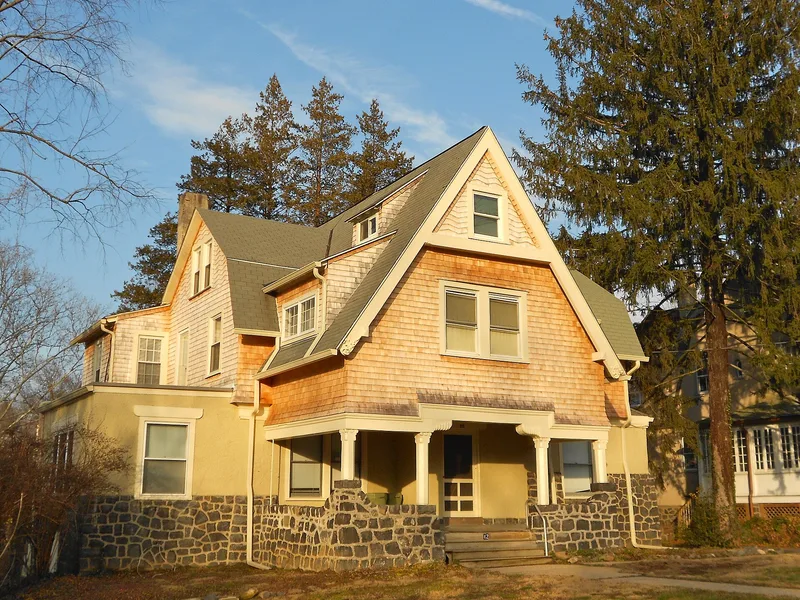
Laid out in the late 1880s and built up into the 1930s, South Wayne is a planned residential district of roughly the southern half of the Wayne Estate in Radnor Township, Delaware County, Pennsylvania. Developers Anthony J. Drexel and George W. Childs, working through managers Herman Wendell and Frank Smith, arranged curving streets, larger lots and park-like plantings to suit commuters who wanted country surroundings with city services, including public water and sewer and a telephone exchange. The houses, mostly two and three stories, are built of stone, weatherboard, wood shingle and stucco in Queen Anne, Shingle Style, Colonial Revival and Tudor Revival designs. Architects included the Price Brothers, who supplied seven designs for the area, and Horace Trumbauer, who designed many houses here. The district is regarded as a well-preserved example of an early suburban plan along the Pennsylvania Railroad's Main Line, and its architecture reflects the period's picturesque ideals.
Machine-generated summary. This summary was generated by a language model from the official nomination document and has not been reviewed line by line by an editor. It may contain errors. Check the source document before relying on any detail. Source: nomination document (PDF) · catalog entry. Generated October 2026 (model claude-haiku-5-5, prompt v1.1-2026-10-29).
| Period of significance | 1870-1930 |
|---|---|
| Styles | Queen Anne, Shingle Style, Colonial Revival, Tudor Revival |
| Areas of significance | Community Planning and Development, Architecture |
| Acreage | 270 |
| Boundary source | NPS cultural-resource GIS polygon |
| Full listing page | South Wayne Historic District (property record) |
What listing means for this property
This is a historic district. Buildings within its boundary are either contributing (they add to the district's significance) or non-contributing. Owners of contributing income-producing buildings can claim the 20% federal rehabilitation tax credit; homeowners should look at state credits. National Register districts impose no design review by themselves; a local historic district ordinance, if one exists, does (the difference explained).
General information, not legal or tax advice. Rules change; confirm with your State Historic Preservation Office or a qualified adviser.