South Fork Fishing and Hunting Club Historic District

The National Park Service has not published a boundary polygon for this district; the map shows the listed properties inside it and the district's reference point.
Why it's listed
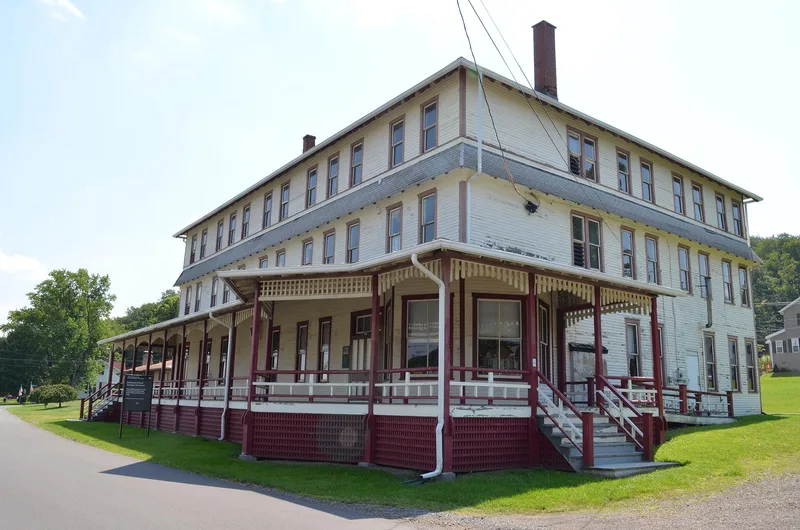
Along the north shore of what was once a three-mile artificial lake near Saint Michael in Adams Township, a linear district of club-era buildings survives from the South Fork Fishing and Hunting Club. The club was incorporated in 1879 by Pittsburgh businessmen seeking private fishing, boating and hunting outside the city, and it admitted only members and their families. Most of the wooden, clapboard-sided cottages and the clubhouse were built around 1883 in Queen Anne, Stick Style and Eastlake forms, with open front porches and bays facing the water. The clubhouse, which once had forty-seven bedrooms and a dining hall seating 150, remains the district's focal point despite the loss of its eastern wing. The club ended with the collapse of the South Fork Dam in May 1889, which caused the Johnstown Flood; the buildings were undamaged, but members never returned. Structure 105 is regarded as the best Queen Anne house in Adams Township and neighbouring townships.
Machine-generated summary. This summary was generated by a language model from the official nomination document and has not been reviewed line by line by an editor. It may contain errors. Check the source document before relying on any detail. Source: nomination document (PDF) · catalog entry. Generated October 2026 (model claude-haiku-5-5, prompt v1.1-2026-10-29).
| Period of significance | 1879-1889 |
|---|---|
| Styles | Queen Anne, Stick Style, Gothic, Eastlake, Victorian sub-types |
| Areas of significance | Architecture, Social History |
| Acreage | 5.6 |
| Boundary source | not published |
| Full listing page | South Fork Fishing and Hunting Club Historic District (property record) |
What listing means for this property
This is a historic district. Buildings within its boundary are either contributing (they add to the district's significance) or non-contributing. Owners of contributing income-producing buildings can claim the 20% federal rehabilitation tax credit; homeowners should look at state credits. National Register districts impose no design review by themselves; a local historic district ordinance, if one exists, does (the difference explained).
General information, not legal or tax advice. Rules change; confirm with your State Historic Preservation Office or a qualified adviser.