Slickville Historic District

Why it's listed
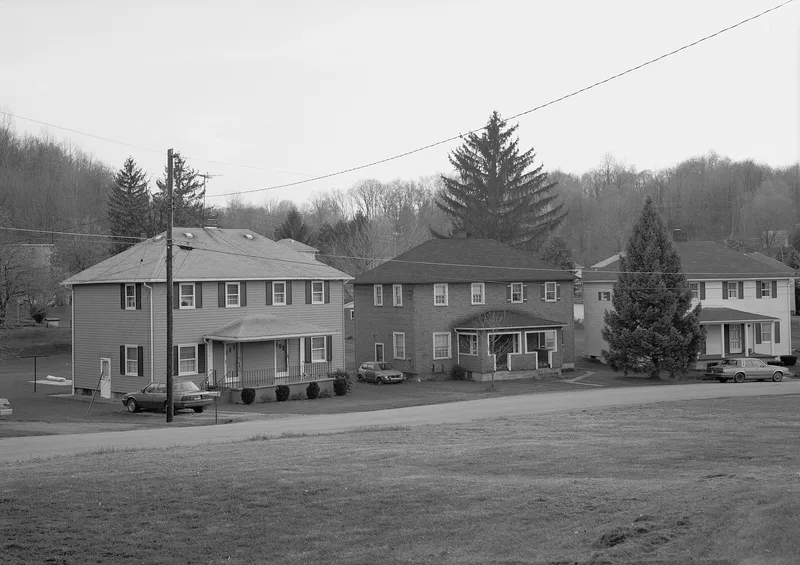
Slickville is a company mining village in northern Salem Township, Westmoreland County, built by the Cambria Steel Company in 1916 and 1917 to serve Slick Mine No. 91, a captive drift mine supplying high-grade coking coal to the Rosedale by-product coke plant near Johnstown. The district includes 77 miners' houses and six managers' houses of vernacular company design, along with a company store, church, school, and four surviving brick mine buildings, including the motor barn, the 1918 power house, and the lamp house. Midvale Steel & Ordnance acquired the property in 1919 and Bethlehem Steel took over in 1923, which later merged the four drift entries into one mine. Production peaked in the late 1920s and ended in October 1943 when the seam was exhausted. The district is valued for its intact layout, its surviving mine structures, and buried archaeological remains of the extraction operations, which together document how captive coal mining and company housing worked in western Pennsylvania.
Machine-generated summary. This summary was generated by a language model from the official nomination document and has not been reviewed line by line by an editor. It may contain errors. Check the source document before relying on any detail. Source: nomination document (PDF) · catalog entry. Generated October 2026 (model claude-haiku-5-5, prompt v1.1-2026-10-29).
| Period of significance | 1916-1943 |
|---|---|
| Styles | No Style; Vernacular Company Housing |
| Areas of significance | Social History, Historic - Non-Aboriginal, Architecture, Community Planning and Development, Industry |
| Acreage | 62 |
| Boundary source | NPS cultural-resource GIS polygon |
| Full listing page | Slickville Historic District (property record) |
What listing means for this property
This is a historic district. Buildings within its boundary are either contributing (they add to the district's significance) or non-contributing. Owners of contributing income-producing buildings can claim the 20% federal rehabilitation tax credit; homeowners should look at state credits. National Register districts impose no design review by themselves; a local historic district ordinance, if one exists, does (the difference explained).
General information, not legal or tax advice. Rules change; confirm with your State Historic Preservation Office or a qualified adviser.