Slatington Historic District

The National Park Service has not published a boundary polygon for this district; the map shows the listed properties inside it and the district's reference point.
Why it's listed
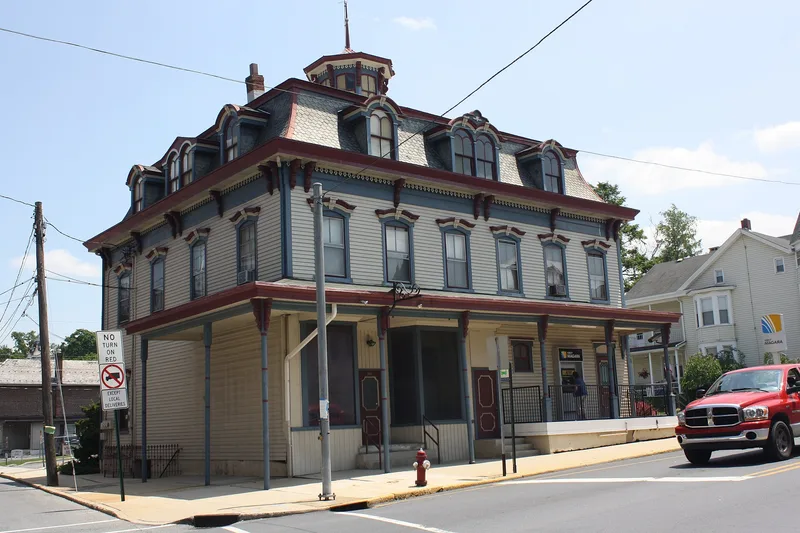
Slatington's downtown and surrounding residential streets along Main Street in Lehigh County hold 561 resources, most of them dwellings, churches and commercial blocks built between 1890 and 1930. The earliest surviving building is a stone barn dated 1807 behind the Henry Kuntz House at 370 Main Street. Settlement grew after slate was discovered in the 1840s, and quarries and slate companies shaped the community for more than half a century. Many workers' and owners' homes remain, along with commercial blocks housing slate company offices. The district is listed for its ties to the slate industry and for its concentration of architecture in many period styles, from Greek Revival and Italianate to Queen Anne and Colonial Revival. Many of its Queen Anne turrets retain their original slate roofing, and a number of churches contain religious art glass. Two bridges and most of the commercial core are counted as contributing.
Machine-generated summary. This summary was generated by a language model from the official nomination document and has not been reviewed line by line by an editor. It may contain errors. Check the source document before relying on any detail. Source: nomination document (PDF) · catalog entry. Generated October 2026 (model claude-haiku-5-5, prompt v1.1-2026-10-29).
| Period of significance | 1807-1953 |
|---|---|
| Styles | Greek Revival, Italianate, Romanesque Revival, Colonial Revival, Neo-Classical Revival, Gothic Revival, Second Empire, Queen Anne, Italian Villa, Tudor Revival, American Foursquare |
| Boundary source | not published |
| Full listing page | Slatington Historic District (property record) |
What listing means for this property
This is a historic district. Buildings within its boundary are either contributing (they add to the district's significance) or non-contributing. Owners of contributing income-producing buildings can claim the 20% federal rehabilitation tax credit; homeowners should look at state credits. National Register districts impose no design review by themselves; a local historic district ordinance, if one exists, does (the difference explained).
General information, not legal or tax advice. Rules change; confirm with your State Historic Preservation Office or a qualified adviser.