Shaw Historic District

Why it's listed
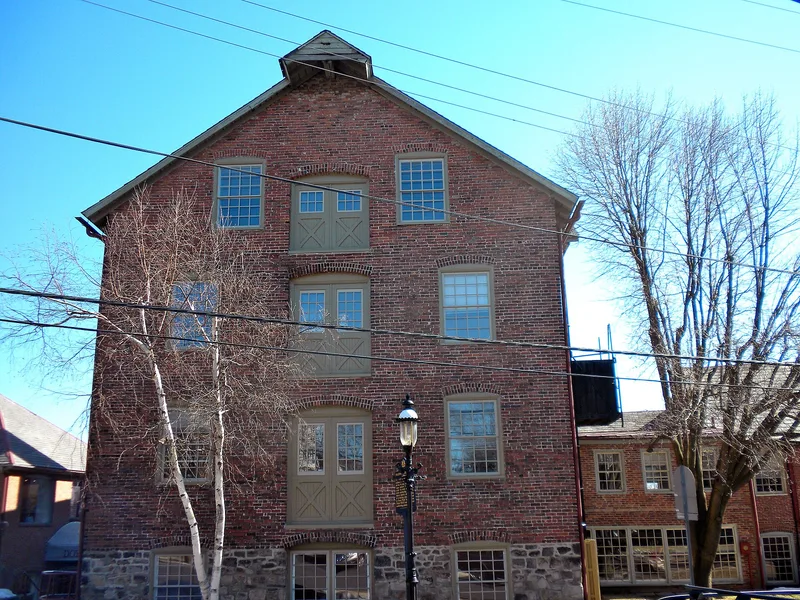
Along South Main Street in Doylestown, a block of lots laid out in 1830 from Francis B. Shaw's Underhill Farm still shapes the streetscape. Houses of two and a half to two and three-quarter stories, mostly built between 1832 and the 1870s, sit close to the sidewalk on long, narrow lots that run back toward South Clinton Street. The block became the site of the Doylestown Agricultural Works, founded in 1849 and making threshers, horsepowers and farm machinery sold across the United States and abroad. Its Doylestown Thresher won first prize at the Philadelphia Exposition of 1876. The Works was rebuilt in brick after a fire in December 1913 and operated until 1968. Nearby stood a livery stable, a railroad hotel and a hardware store, which show how the block served local commerce after the railroad arrived in 1856. The nomination values the group for its conservative architecture, its industrial history and its record of early town growth.
Machine-generated summary. This summary was generated by a language model from the official nomination document and has not been reviewed line by line by an editor. It may contain errors. Check the source document before relying on any detail. Source: nomination document (PDF) · catalog entry. Generated October 2026 (model claude-haiku-5-5, prompt v1.1-2026-10-29).
| Period of significance | 1830-1937 |
|---|---|
| Areas of significance | Industry, Commerce, Engineering, Architecture, Agriculture |
| Acreage | 1.9 |
| Boundary source | NPS cultural-resource GIS polygon |
| Full listing page | Shaw Historic District (property record) |
What listing means for this property
This is a historic district. Buildings within its boundary are either contributing (they add to the district's significance) or non-contributing. Owners of contributing income-producing buildings can claim the 20% federal rehabilitation tax credit; homeowners should look at state credits. National Register districts impose no design review by themselves; a local historic district ordinance, if one exists, does (the difference explained).
General information, not legal or tax advice. Rules change; confirm with your State Historic Preservation Office or a qualified adviser.