Ross, Frank L., Farm

Why it's listed
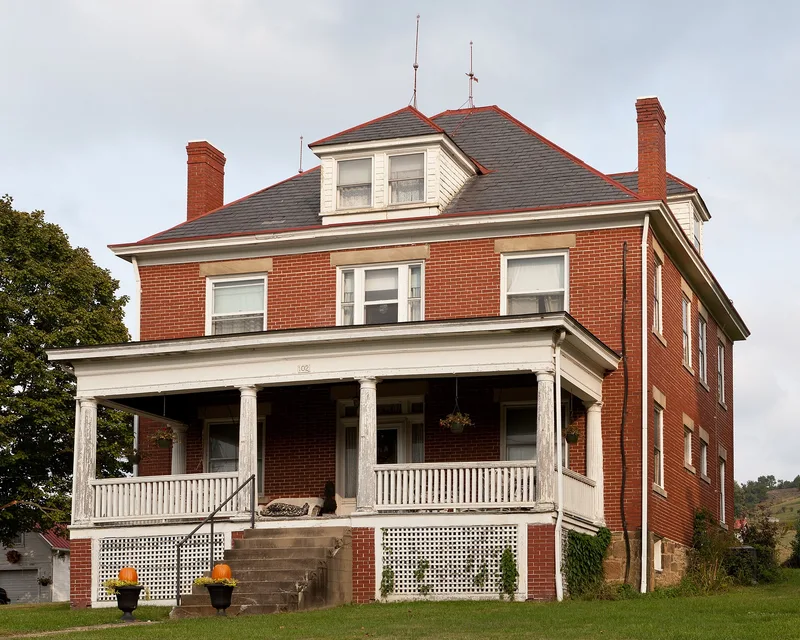
Set on rolling land west and east of State Route 519 in North Bethlehem Township, the Frank L. Ross Farm is a complete early twentieth-century mixed farmstead. Frank L. Ross acquired the tract from his father in 1910-11 and built most of the complex as new, including a two-story red brick farmhouse with a center hall and a bungalow built as a honeymoon cottage. The farm combines barns, a sheep barn, a worker's house, corn cribs and a silo that stood from about 1924 to 1962, and it is regarded as an unusually comprehensive example of the county's move from sheep raising to general farming. By 1924 Ross kept the largest flock in North Bethlehem Township, with 450 sheep, and he also ran dairy cattle, poultry, hogs, an orchard and alfalfa fields. Architect C.M. Hall designed the farmhouse, and F.M. Hixon was the builder. The farm's buildings and fields remain largely intact, and the property is significant for agriculture and architecture.
Machine-generated summary. This summary was generated by a language model from the official nomination document and has not been reviewed line by line by an editor. It may contain errors. Check the source document before relying on any detail. Source: nomination document (PDF) · catalog entry. Generated October 2026 (model claude-haiku-5-5, prompt v1.1-2026-10-29).
| Period of significance | ca. 1910-1950 |
|---|---|
| Styles | Colonial Revival; Bungalow; American Four Square |
| Areas of significance | Agriculture, Architecture |
| Acreage | 174 |
| Boundary source | NPS cultural-resource GIS polygon |
| Full listing page | Ross, Frank L., Farm (property record) |
What listing means for this property
This is a historic district. Buildings within its boundary are either contributing (they add to the district's significance) or non-contributing. Owners of contributing income-producing buildings can claim the 20% federal rehabilitation tax credit; homeowners should look at state credits. National Register districts impose no design review by themselves; a local historic district ordinance, if one exists, does (the difference explained).
General information, not legal or tax advice. Rules change; confirm with your State Historic Preservation Office or a qualified adviser.