Ross Common Manor

The National Park Service has not published a boundary polygon for this district; the map shows the listed properties inside it and the district's reference point.
Why it's listed
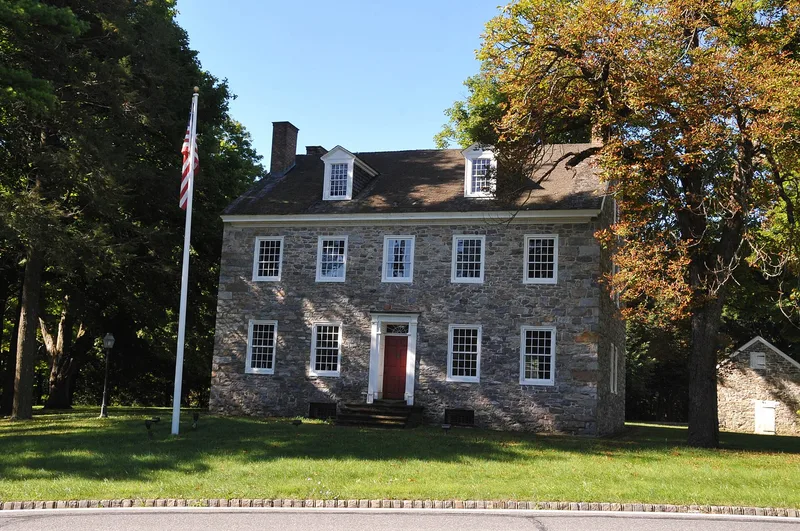
Built of native Blue Mountain stone around 1810 on the north side of Wind Gap pass, the Ross Common Manor is a two-and-a-half-story house with a gable roof, a two-story kitchen wing dating to about 1809, and an 1810 ice house with a stone-lined ice pit. Judge John Ross, who was born in 1770, built the house as his country seat after acquiring about 450 acres in the foothills of the Blue Mountains by 1808. Ross served as prothonotary of Northampton County, a state legislator from 1812 to 1816, a congressman from 1816 to 1818, a Common Pleas judge, and a justice of the Pennsylvania Supreme Court until his death in 1834. Later, the house operated as a tavern on the Wilkes-Barre to Easton turnpike for roughly 25 years during the stagecoach era. Its Georgian-influenced design and surviving mill and outbuildings make it a rare remaining complex of its kind in a remote mountain setting.
Machine-generated summary. This summary was generated by a language model from the official nomination document and has not been reviewed line by line by an editor. It may contain errors. Check the source document before relying on any detail. Source: nomination document (PDF) · catalog entry. Generated October 2026 (model claude-haiku-5-5, prompt v1.1-2026-10-29).
| Period of significance | 1810-1835 |
|---|---|
| Styles | Georgian style, Pennsylvania vernacular |
| Areas of significance | Commerce, Politics/Government, Architecture |
| Acreage | 3 |
| Boundary source | not published |
| Full listing page | Ross Common Manor (property record) |
What listing means for this property
This is a historic district. Buildings within its boundary are either contributing (they add to the district's significance) or non-contributing. Owners of contributing income-producing buildings can claim the 20% federal rehabilitation tax credit; homeowners should look at state credits. National Register districts impose no design review by themselves; a local historic district ordinance, if one exists, does (the difference explained).
General information, not legal or tax advice. Rules change; confirm with your State Historic Preservation Office or a qualified adviser.