Rock Creek-White Run Union Hospital Complex

Why it's listed
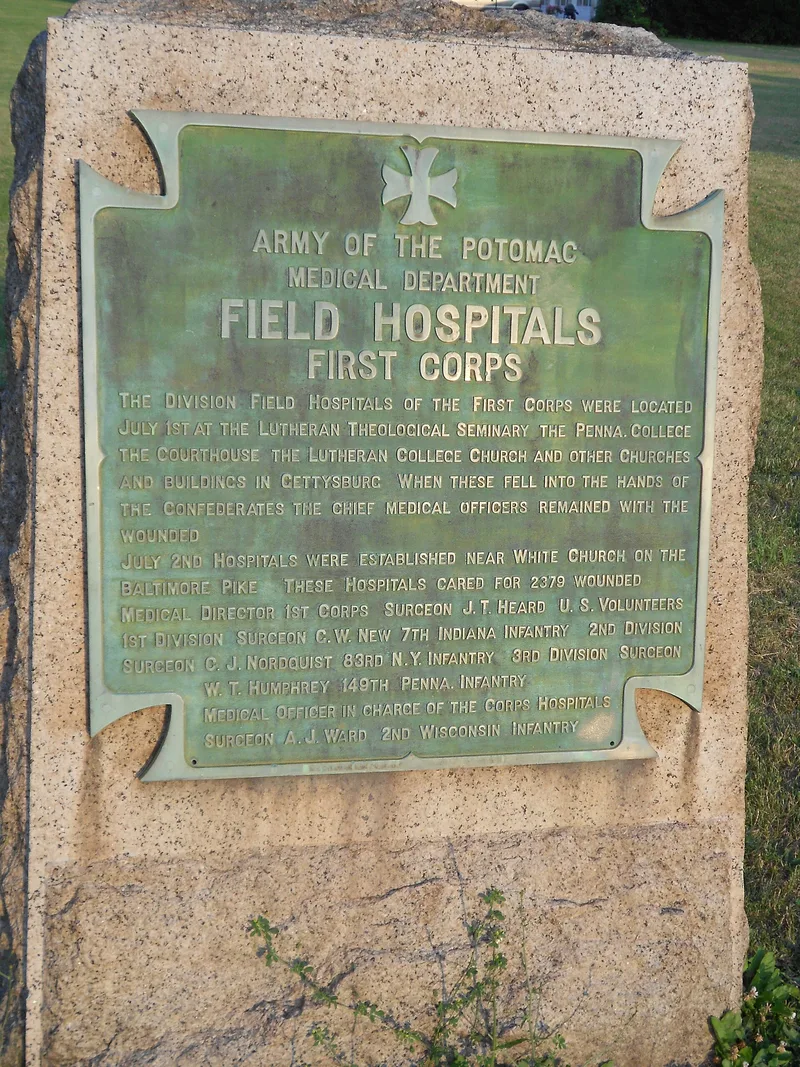
Rock Creek and White Run, southeast of Gettysburg in Adams County, Pennsylvania, hold a cluster of farmsteads and open fields that served as Union corps hospitals from early July 1863. The Second, Third, Fifth, Sixth and Twelfth Corps, along with First Corps sites, treated thousands of wounded here. The Jacob Schwartz farm alone received nearly 3,300 wounded, close to 1,000 of them Confederates. Roughly 10,000 men were treated within the district, making it the largest concentrated area of battle-wound treatment at Gettysburg. Patients were sheltered in farmhouses, barns and outbuildings, and in tents set up in the fields. Surviving farm buildings from the battle era, the open landscape and the convergence of the creeks remain largely intact. The district is significant for its military history and for its record of wartime health care, and it also illustrates the strain the battle placed on local farms and residents.
Machine-generated summary. This summary was generated by a language model from the official nomination document and has not been reviewed line by line by an editor. It may contain errors. Check the source document before relying on any detail. Source: nomination document (PDF) · catalog entry. Generated October 2026 (model claude-haiku-5-5, prompt v1.1-2026-10-29).
| Period of significance | 1863 |
|---|---|
| Styles | Other/Pennsylvania Vernacular Farmhouse |
| Areas of significance | Military |
| Acreage | 550 |
| Boundary source | NPS cultural-resource GIS polygon |
| Full listing page | Rock Creek-White Run Union Hospital Complex (property record) |
What listing means for this property
This is a historic district. Buildings within its boundary are either contributing (they add to the district's significance) or non-contributing. Owners of contributing income-producing buildings can claim the 20% federal rehabilitation tax credit; homeowners should look at state credits. National Register districts impose no design review by themselves; a local historic district ordinance, if one exists, does (the difference explained).
General information, not legal or tax advice. Rules change; confirm with your State Historic Preservation Office or a qualified adviser.