RittenhouseTown Historic District

Why it's listed
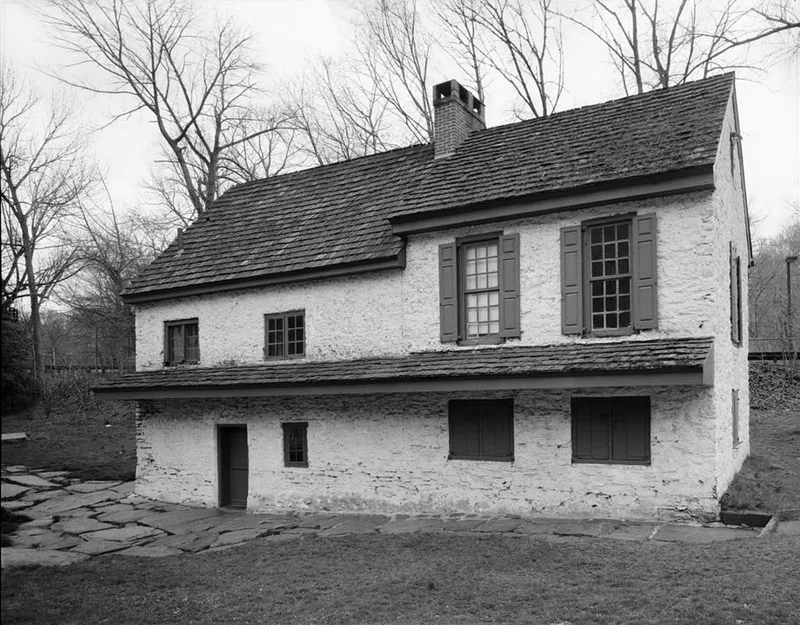
Set in a steep valley of Fairmount Park along Monoshone Creek, RittenhouseTown grew up around the paper mills of William Rittenhouse, who arrived in Philadelphia in 1687 or 1688. A partnership leased a twenty-acre tract from Samuel Carpenter in 1690, and the mill that followed is regarded as the first paper mill in British North America. Rittenhouse paper bearing the WR watermark was among the city's earliest exports. The family kept a near monopoly on colonial paper making for roughly forty years and later ran grist and cotton mills along the creek. Seven stone buildings from 1690 to about 1830 survive, including 207 Lincoln Drive, built in 1707 with a cooking fireplace in its basement. The village is also the birthplace of David Rittenhouse in 1732, who became an astronomer, clockmaker and the first director of the United States Mint.
Machine-generated summary. This summary was generated by a language model from the official nomination document and has not been reviewed line by line by an editor. It may contain errors. Check the source document before relying on any detail. Source: nomination document (PDF) · catalog entry. Generated October 2026 (model claude-haiku-5-5, prompt v1.1-2026-10-29).
| Period of significance | 1690-1850 |
|---|---|
| Styles | Colonial; Georgian; Federal |
| Areas of significance | Industry, Science |
| Acreage | 84 |
| Boundary source | NPS cultural-resource GIS polygon |
| Full listing page | RittenhouseTown Historic District (property record) |
What listing means for this property
This is a historic district. Buildings within its boundary are either contributing (they add to the district's significance) or non-contributing. Owners of contributing income-producing buildings can claim the 20% federal rehabilitation tax credit; homeowners should look at state credits. National Register districts impose no design review by themselves; a local historic district ordinance, if one exists, does (the difference explained).
General information, not legal or tax advice. Rules change; confirm with your State Historic Preservation Office or a qualified adviser.