Ridge Valley Rural Historic District

Why it's listed
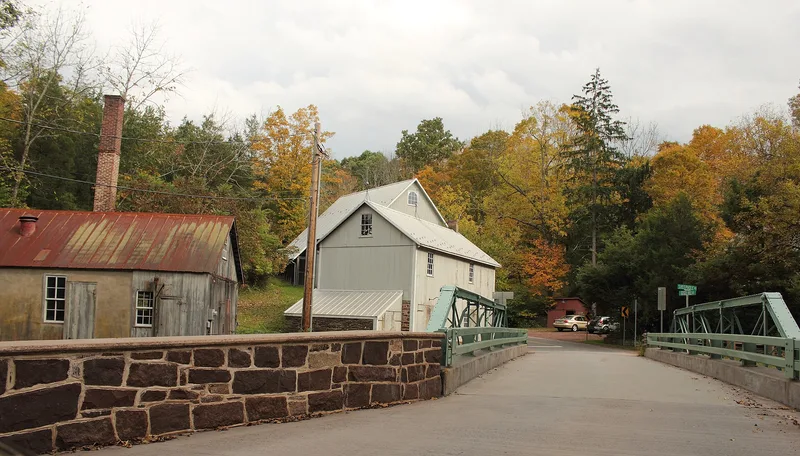
Farmsteads of stone and frame line the creeks and winding dirt and paved roads of Tinicum Township in northern Bucks County, where the land drops sharply into a valley of exposed shale and wooded slopes. The district holds 77 resources, including fourteen houses, twelve bank barns, six bridges and two fords. Settlement began in the late eighteenth century, and the 1798 Federal Direct Tax recorded log houses that were later replaced by stone, which remained the main building material well into the mid-nineteenth century. Its farms were relatively modest, with few large houses, and the steep, hilly land limited mechanized farming after World War II. Few farms were modernized, so the district keeps a nineteenth-century character. In the late 1920s and 1930s, New York artists, including Charles Rudy and John Wexley, bought farms here, and their conversions helped preserve the district. The district is regarded as a well preserved example of farming in small stream valleys.
Machine-generated summary. This summary was generated by a language model from the official nomination document and has not been reviewed line by line by an editor. It may contain errors. Check the source document before relying on any detail. Source: nomination document (PDF) · catalog entry. Generated October 2026 (model claude-haiku-5-5, prompt v1.1-2026-10-29).
| Period of significance | 1790-1940 |
|---|---|
| Styles | Vernacular Southeast Pennsylvania |
| Areas of significance | Agriculture, Architecture |
| Acreage | 575 |
| Boundary source | NPS cultural-resource GIS polygon |
| Full listing page | Ridge Valley Rural Historic District (property record) |
What listing means for this property
This is a historic district. Buildings within its boundary are either contributing (they add to the district's significance) or non-contributing. Owners of contributing income-producing buildings can claim the 20% federal rehabilitation tax credit; homeowners should look at state credits. National Register districts impose no design review by themselves; a local historic district ordinance, if one exists, does (the difference explained).
General information, not legal or tax advice. Rules change; confirm with your State Historic Preservation Office or a qualified adviser.