Red Hill Historic District

Why it's listed
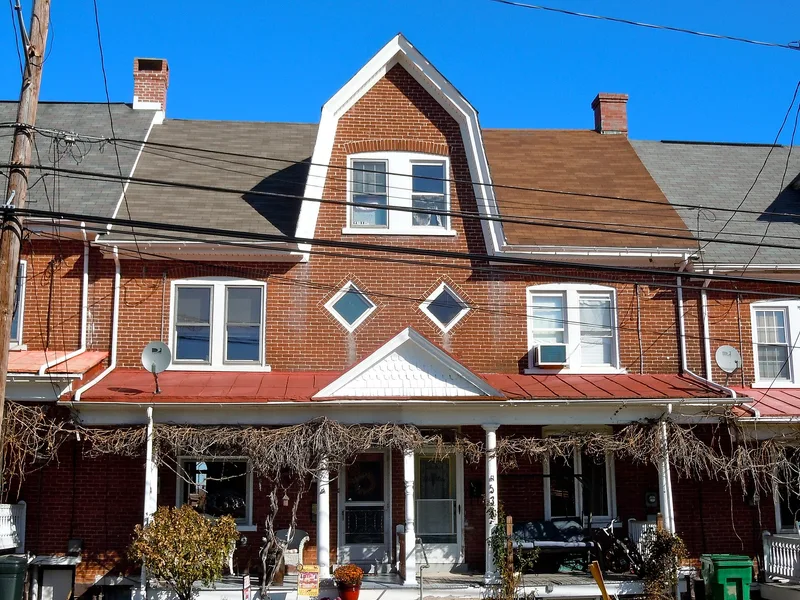
Red Hill is a small borough along Main Street (Route 29) in Montgomery County, Pennsylvania, whose core developed along the road laid out in 1735 as the Great Road to Philadelphia. Its growth came with the cigar industry of the 1880s to 1920s. Miller and Kline built a three-and-one-half-story brick cigar factory at 350 Main Street in the mid-1890s, and builders filled the gaps on either side with single and double brick millworkers' houses. S.C. Moyer's late-1880s factory on East Sixth Street drew further workers' housing, and William N. Trump built a rowhouse group on Adams Street by 1910. The district also keeps earlier buildings, including the Hillegassville Hotel of 1811 and the late Federal Josiah Hillegass House of 1847. Of its 185 buildings, 154 are contributing and 9 significant, and the district is valued for its surviving form and porches.
Machine-generated summary. This summary was generated by a language model from the official nomination document and has not been reviewed line by line by an editor. It may contain errors. Check the source document before relying on any detail. Source: nomination document (PDF) · catalog entry. Generated October 2026 (model claude-haiku-5-5, prompt v1.1-2026-10-29).
| Period of significance | 1811 - 1925 |
|---|---|
| Styles | Queen Anne; Pennsylvania German; Georgian vernacular; late Federal; Greek Revival; Downing Gothic; Colonial Revival |
| Areas of significance | Industry, Architecture |
| Acreage | 55 |
| Boundary source | NPS cultural-resource GIS polygon |
| Full listing page | Red Hill Historic District (property record) |
What listing means for this property
This is a historic district. Buildings within its boundary are either contributing (they add to the district's significance) or non-contributing. Owners of contributing income-producing buildings can claim the 20% federal rehabilitation tax credit; homeowners should look at state credits. National Register districts impose no design review by themselves; a local historic district ordinance, if one exists, does (the difference explained).
General information, not legal or tax advice. Rules change; confirm with your State Historic Preservation Office or a qualified adviser.