Reading Furnace Historic District

Why it's listed
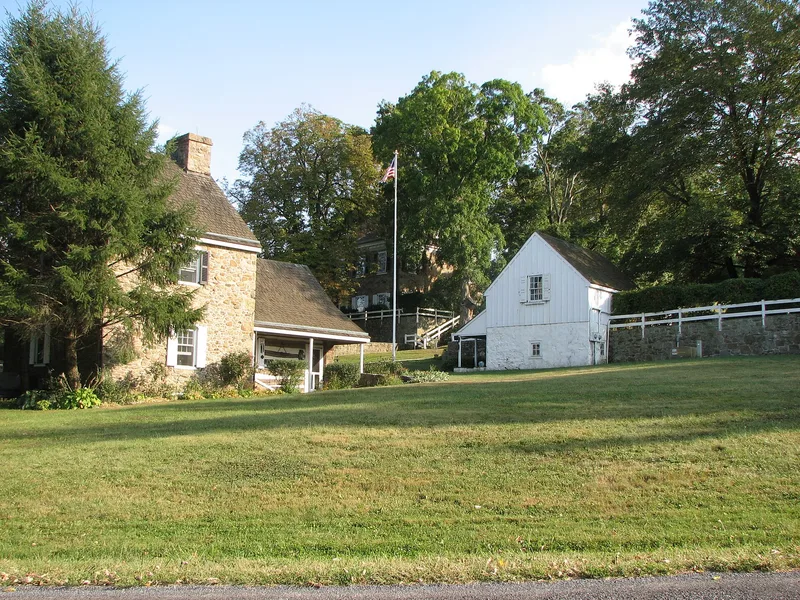
Along the South Branch of French Creek in Warwick and East Nantmeal Townships, Chester County, the Reading Furnace Historic District grew from an iron furnace begun in 1736 under William Branson. The furnace operated until 1811, after which the site became a farm. The mansion was built in sections from 1744 to 1936. Its 1812 section holds finely fluted cornices, doorways and fireplace mantels by Gottlieb Drexel, a Berks County carpenter whose woodwork is rare in northern Chester County. In 1936 Arthur Pew bought the property and hired Richardson Brognard Okie, who remodeled the house, added a large three-block wing, and introduced Arts and Crafts woodwork. The estate is regarded as one of the largest country houses of its kind in the two townships. The district also includes a dam ruin, the furnace foundation, outbuildings and a stone arch bridge of 1904.
Machine-generated summary. This summary was generated by a language model from the official nomination document and has not been reviewed line by line by an editor. It may contain errors. Check the source document before relying on any detail. Source: nomination document (PDF) · catalog entry. Generated October 2026 (model claude-haiku-5-5, prompt v1.1-2026-10-29).
| Period of significance | 1736-1936 |
|---|---|
| Areas of significance | Architecture |
| Acreage | 13.3 |
| Boundary source | NPS cultural-resource GIS polygon |
| Full listing page | Reading Furnace Historic District (property record) |
What listing means for this property
This is a historic district. Buildings within its boundary are either contributing (they add to the district's significance) or non-contributing. Owners of contributing income-producing buildings can claim the 20% federal rehabilitation tax credit; homeowners should look at state credits. National Register districts impose no design review by themselves; a local historic district ordinance, if one exists, does (the difference explained).
General information, not legal or tax advice. Rules change; confirm with your State Historic Preservation Office or a qualified adviser.