Railroad Borough Historic District

Why it's listed
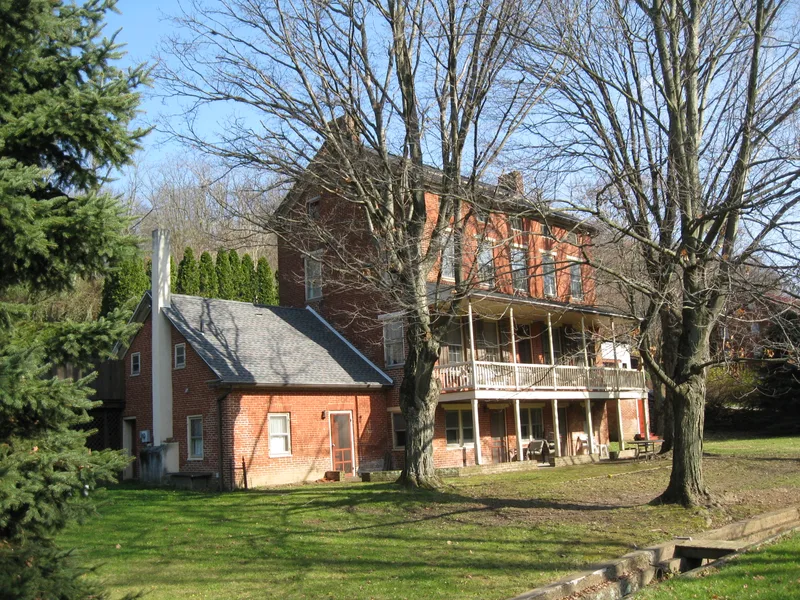
Railroad Borough is a community of brick, stone and frame buildings in two narrow valleys of southern York County, Pennsylvania, developed around a freight depot on the York and Maryland Line Rail Road. The line opened from York to Baltimore in August 1838 and was considered an engineering marvel for its steep gradients. Baltimore-backed rail construction brought the depot, and the borough was incorporated in 1871 after the area had earlier supported grist mills, bark mills and a tannery. From 1860 to 1880 larger works were established, including a flavine mill begun in 1869, a phosphate factory set up by G.P. Everhart before 1876, and a brewery founded by Frederick Helb in 1867 that could produce 800 barrels a year. Helb also added a distillery in 1870. The furniture works begun in 1900 later became the Sieling Furniture Co. The buildings show Greek Revival, Italianate and Queen Anne details in a restrained, practical manner, and the district is valued as a surviving record of the rail and manufacturing economy of the period.
Machine-generated summary. This summary was generated by a language model from the official nomination document and has not been reviewed line by line by an editor. It may contain errors. Check the source document before relying on any detail. Source: nomination document (PDF) · catalog entry. Generated October 2026 (model claude-haiku-5-5, prompt v1.1-2026-10-29).
| Period of significance | 1840-1920 |
|---|---|
| Styles | Greek Revival, Italianate and Queen Anne influences applied to Georgian forms |
| Areas of significance | Industry, Transportation, Architecture |
| Acreage | 33 |
| Boundary source | NPS cultural-resource GIS polygon |
| Full listing page | Railroad Borough Historic District (property record) |
What listing means for this property
This is a historic district. Buildings within its boundary are either contributing (they add to the district's significance) or non-contributing. Owners of contributing income-producing buildings can claim the 20% federal rehabilitation tax credit; homeowners should look at state credits. National Register districts impose no design review by themselves; a local historic district ordinance, if one exists, does (the difference explained).
General information, not legal or tax advice. Rules change; confirm with your State Historic Preservation Office or a qualified adviser.