Quiet Valley Farm

Why it's listed
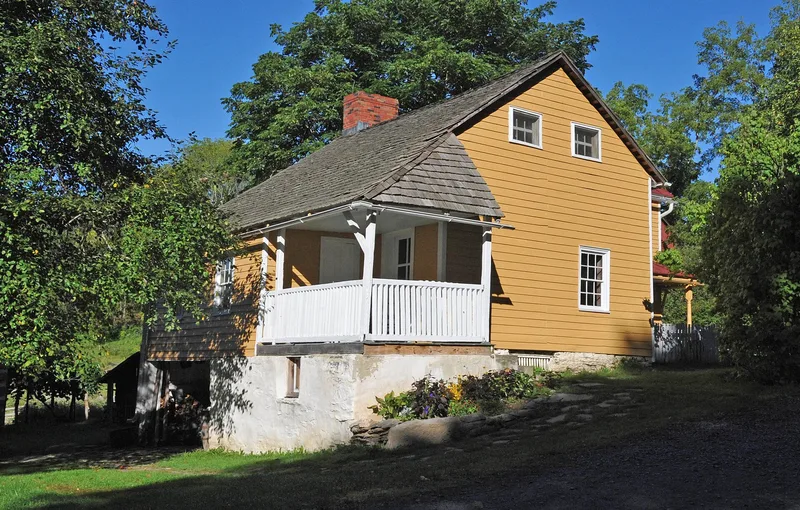
Quiet Valley Farm is a 72-acre homestead in the Pocono foothills near Stroudsburg, Monroe County, Pennsylvania. Johan Peter Zepper, also recorded as Topper, bought the tract in 1765, and he and his wife had emigrated from the Palatinate to settle land much like what they had left in Europe. The main house began as a square log building on a stone basement, with a small cave-like kitchen and an earthen cold room. Early in the 19th century a second story was added, and in 1892 an 18 by 11 foot frame kitchen wing and porch were built. The house has no electricity or plumbing and keeps most of its 19th-century furnishings. The present bank barn dates from 1850 and measures 46 by 47 feet, with a forebay and 19th-century farm implements still inside. The farm is significant as a nearly complete collection of 18th and 19th century farm buildings and implements, and as a record of the self-sufficient farm life of the extended family, which the document describes as now largely gone. The property is operated today as a functioning museum.
Machine-generated summary. This summary was generated by a language model from the official nomination document and has not been reviewed line by line by an editor. It may contain errors. Check the source document before relying on any detail. Source: nomination document (PDF) · catalog entry. Generated October 2026 (model claude-haiku-5-5, prompt v1.1-2026-10-29).
| Styles | Bank barn |
|---|---|
| Areas of significance | Architecture, Agriculture |
| Acreage | 72 |
| Boundary source | NPS cultural-resource GIS polygon |
| Full listing page | Quiet Valley Farm (property record) |
What listing means for this property
This is a historic district. Buildings within its boundary are either contributing (they add to the district's significance) or non-contributing. Owners of contributing income-producing buildings can claim the 20% federal rehabilitation tax credit; homeowners should look at state credits. National Register districts impose no design review by themselves; a local historic district ordinance, if one exists, does (the difference explained).
General information, not legal or tax advice. Rules change; confirm with your State Historic Preservation Office or a qualified adviser.