Philadelphia Naval Shipyard Historic District

Why it's listed
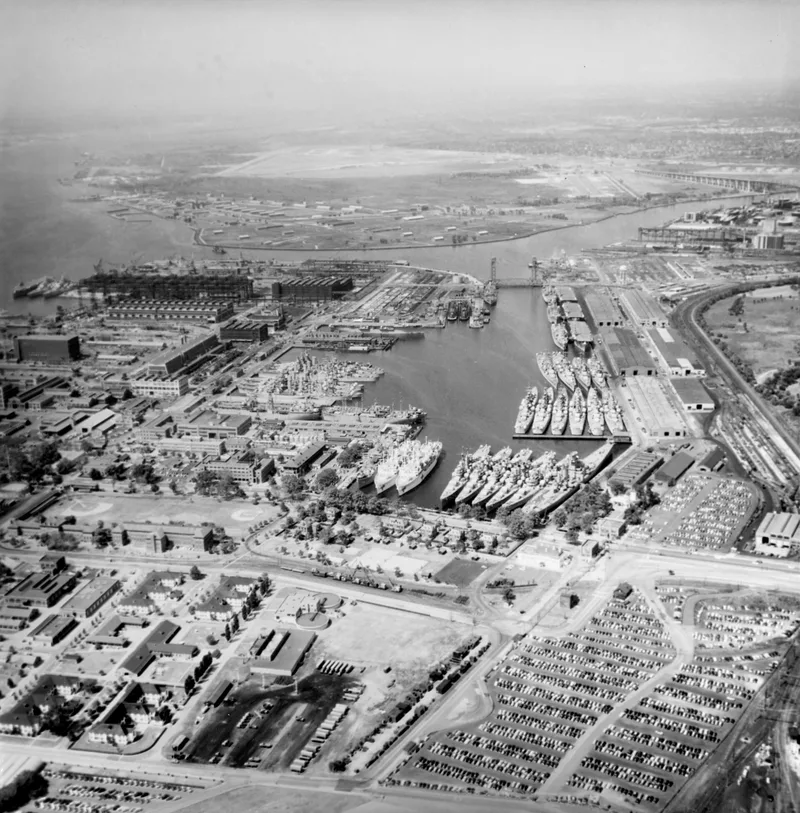
Occupying about 482 acres at the south end of Broad Street on the Delaware River in Philadelphia, this former Navy yard grew from a nineteenth-century core into a complex of shops, dry docks, piers, barracks and warehouses. The first permanent building, a Yard and Dock storehouse, was begun in 1873 and completed in 1875. The yard was founded on League Island, a marshy tract acquired in 1868, and it expanded through a dredging and fill program. Its significance rests on its role in Navy shipbuilding and repair, on the Naval Aircraft Factory, which built flying boats during the First World War, and on the Naval Boiler and Turbine Laboratory, a propulsion research center. It was also home to the Marine Corps Reservation, which included barracks and Georgian Revival officers' quarters. The district includes buildings in Beaux Arts, Renaissance Revival, Italianate and Second Empire styles, and its period of significance ends in 1945. The Navy yard closed in 1995.
Machine-generated summary. This summary was generated by a language model from the official nomination document and has not been reviewed line by line by an editor. It may contain errors. Check the source document before relying on any detail. Source: nomination document (PDF) · catalog entry. Generated October 2026 (model claude-haiku-5-5, prompt v1.1-2026-10-29).
| Period of significance | 1873-1945 |
|---|---|
| Styles | Georgian Revival, Renaissance Revival, Beaux Arts, vernacular Victorian, Italianate, Second Empire, modern industrial design |
| Areas of significance | Military, Architecture, Engineering |
| Acreage | 482 |
| Boundary source | NPS cultural-resource GIS polygon |
| Full listing page | Philadelphia Naval Shipyard Historic District (property record) |
What listing means for this property
This is a historic district. Buildings within its boundary are either contributing (they add to the district's significance) or non-contributing. Owners of contributing income-producing buildings can claim the 20% federal rehabilitation tax credit; homeowners should look at state credits. National Register districts impose no design review by themselves; a local historic district ordinance, if one exists, does (the difference explained).
General information, not legal or tax advice. Rules change; confirm with your State Historic Preservation Office or a qualified adviser.