Pennsylvania Railroad District

Why it's listed
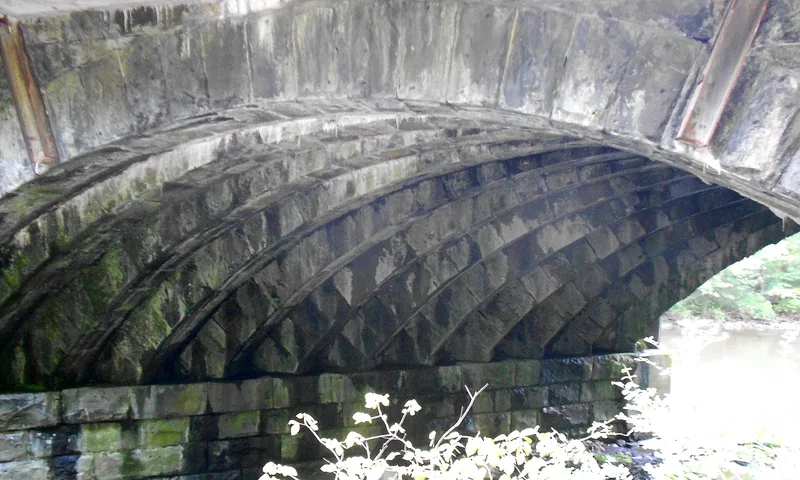
Ten stone arch railroad bridges, two parallel tunnels and the connecting right-of-way form a 5.15-mile railroad district in northwestern Huntingdon County, between Spruce Creek and Birmingham. The Pennsylvania Railroad built the line through the mountain ridges along the Little Juniata River, where the terrain forced the track to cross the river repeatedly and pass through Tussey Mountain. The bridges were constructed of stone ashlar in multiple semi-circular arches, replacing earlier iron deck truss and deck girder structures, and between 1886 and 1963 many were strengthened or widened with concrete and steel. The first tunnel, 1151 feet long, was built in 1850 for a single track, and a second 1075-foot tunnel was added in 1900 during the four-tracking of the main line. The district is regarded as an engineering achievement and as a key link in rail transportation between Philadelphia and the west.
Machine-generated summary. This summary was generated by a language model from the official nomination document and has not been reviewed line by line by an editor. It may contain errors. Check the source document before relying on any detail. Source: nomination document (PDF) · catalog entry. Generated October 2026 (model claude-haiku-5-5, prompt v1.1-2026-10-29).
| Period of significance | 1850-1939 |
|---|---|
| Areas of significance | Engineering, Transportation |
| Acreage | 50 |
| Boundary source | NPS cultural-resource GIS polygon |
| Full listing page | Pennsylvania Railroad District (property record) |
What listing means for this property
This is a historic district. Buildings within its boundary are either contributing (they add to the district's significance) or non-contributing. Owners of contributing income-producing buildings can claim the 20% federal rehabilitation tax credit; homeowners should look at state credits. National Register districts impose no design review by themselves; a local historic district ordinance, if one exists, does (the difference explained).
General information, not legal or tax advice. Rules change; confirm with your State Historic Preservation Office or a qualified adviser.