Penn-Craft Historic District

Why it's listed
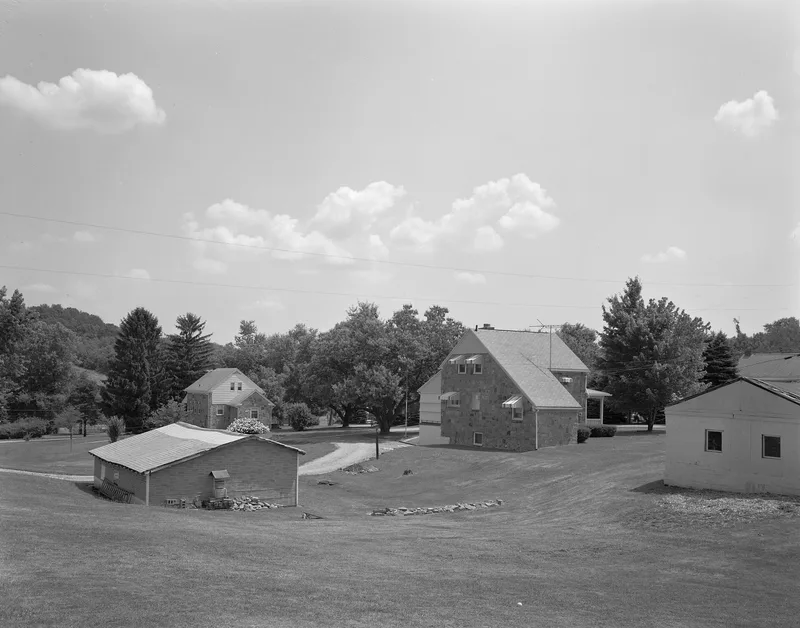
Penn-Craft is a homestead community in the rural hills of Fayette County, Pennsylvania, laid out on 200 acres of farmland ten miles northwest of Uniontown. Between 1937 and 1943, the American Friends Service Committee and fifty families of unemployed coal miners built the community, which includes stone houses of local red sandstone, frame temporary houses, outhouses, brooders, a cooperative store and a factory. William Macy Stanton, a Quaker architect who had worked on the federal Cumberland Homesteads, prepared the layout and house designs, and project manager David Day devised movable wooden forms that let unskilled workers lay straight stone walls. Homesteaders built their own houses and earned labor credit for work on one another's homes. The district is regarded as an exceptional national example of 1930s back-to-the-land planning and the most complete example of its type in Pennsylvania. It was intended as a model that corrected problems found in federal subsistence homestead projects.
Machine-generated summary. This summary was generated by a language model from the official nomination document and has not been reviewed line by line by an editor. It may contain errors. Check the source document before relying on any detail. Source: nomination document (PDF) · catalog entry. Generated October 2026 (model claude-haiku-5-5, prompt v1.1-2026-10-29).
| Period of significance | 1937-1943 |
|---|---|
| Styles | Colonial Revival |
| Areas of significance | Community Planning and Development, Social History |
| Acreage | 175 |
| Boundary source | NPS cultural-resource GIS polygon |
| Full listing page | Penn-Craft Historic District (property record) |
What listing means for this property
This is a historic district. Buildings within its boundary are either contributing (they add to the district's significance) or non-contributing. Owners of contributing income-producing buildings can claim the 20% federal rehabilitation tax credit; homeowners should look at state credits. National Register districts impose no design review by themselves; a local historic district ordinance, if one exists, does (the difference explained).
General information, not legal or tax advice. Rules change; confirm with your State Historic Preservation Office or a qualified adviser.