Paradise Valley Historic District

Why it's listed
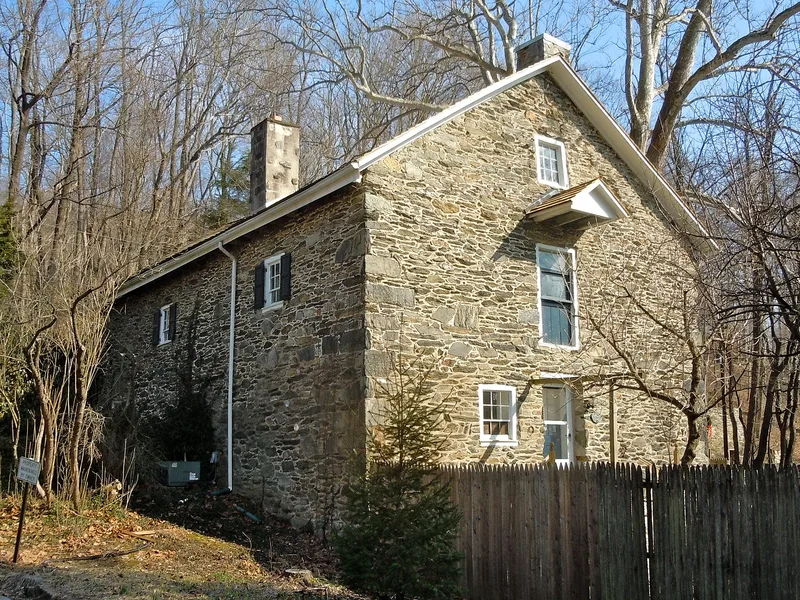
Paradise Valley is a three-mile stretch of farmland along Valley Creek in the northern part of East Bradford Township, Chester County. Settled by English Quakers in the 1700s, it holds farmsteads built mostly of local fieldstone, with bank barns, springhouses and a former water-powered grist mill at the crossroads. The earliest official settlement dates from 1733, when Thomas Price bought a warrant for 256 acres. Most farms in the valley ranged from 100 to 150 acres, and many were founded between 1750 and 1780. The houses show a sequence of types, from an early log house to Georgian and Federal-period stone dwellings, and nine contributing houses have stone additions from the period of significance. The valley's road network, including a private way that once formed part of Moore's Road surveyed in 1735, reflects its colonial origins. The district is valued for keeping its farm layout and buildings largely intact, documenting how the valley moved from grain growing to dairy and stock farming in the 19th century.
Machine-generated summary. This summary was generated by a language model from the official nomination document and has not been reviewed line by line by an editor. It may contain errors. Check the source document before relying on any detail. Source: nomination document (PDF) · catalog entry. Generated October 2026 (model claude-haiku-5-5, prompt v1.1-2026-10-29).
| Period of significance | 1730-1940 |
|---|---|
| Styles | Colonial; Georgian (vernacular); Early Republic; Federal (vernacular) |
| Areas of significance | Agriculture, Exploration/Settlement, Architecture |
| Acreage | 260 |
| Boundary source | NPS cultural-resource GIS polygon |
| Full listing page | Paradise Valley Historic District (property record) |
What listing means for this property
This is a historic district. Buildings within its boundary are either contributing (they add to the district's significance) or non-contributing. Owners of contributing income-producing buildings can claim the 20% federal rehabilitation tax credit; homeowners should look at state credits. National Register districts impose no design review by themselves; a local historic district ordinance, if one exists, does (the difference explained).
General information, not legal or tax advice. Rules change; confirm with your State Historic Preservation Office or a qualified adviser.