Paradise Furnace

Why it's listed
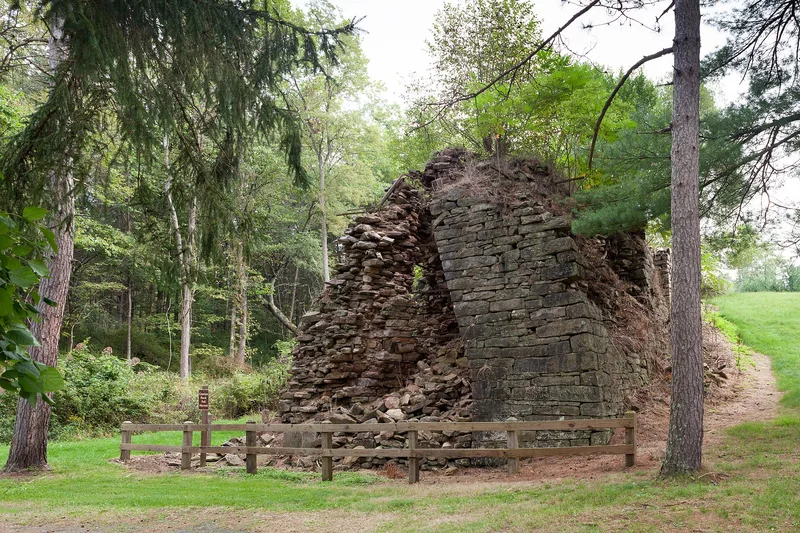
Paradise Furnace is an iron-making site in Trough Creek State Park, in south-central Huntingdon County, Pennsylvania. Iron interests began there around 1798, when a bloomery was established near the mouth of Trough Creek, and the site operated intermittently until 1867 under several owners, including Reuben Trexler and Horatio Trexler & Co. In the 1840s the furnace was renamed from Mary Ann to Paradise Furnace under manager P.P. Dewees. The surviving buildings are a coursed rubble stone furnace stack from the 1830s, a Georgian plan stone ironmaster's mansion built in the 1830s, and a two-story hewn log house dating to the late 1700s that served as worker housing. The district is significant for its industrial history: it was the first furnace in the county to use coke made from Broad Top coal, and its remaining buildings represent the iron plantation type. Its later use by the Civilian Conservation Corps in the 1930s shaped the site's present form.
Machine-generated summary. This summary was generated by a language model from the official nomination document and has not been reviewed line by line by an editor. It may contain errors. Check the source document before relying on any detail. Source: nomination document (PDF) · catalog entry. Generated October 2026 (model claude-haiku-5-5, prompt v1.1-2026-10-29).
| Period of significance | 1798-1867 |
|---|---|
| Styles | Georgian |
| Areas of significance | Industry |
| Acreage | 3 |
| Boundary source | NPS cultural-resource GIS polygon |
| Full listing page | Paradise Furnace (property record) |
What listing means for this property
This is a historic district. Buildings within its boundary are either contributing (they add to the district's significance) or non-contributing. Owners of contributing income-producing buildings can claim the 20% federal rehabilitation tax credit; homeowners should look at state credits. National Register districts impose no design review by themselves; a local historic district ordinance, if one exists, does (the difference explained).
Noted as vacant in the nomination. Nomination documents can be decades old; current status may differ. If you are considering buying an empty listed property, read the due-diligence checklist.
General information, not legal or tax advice. Rules change; confirm with your State Historic Preservation Office or a qualified adviser.