Old Economy

Why it's listed
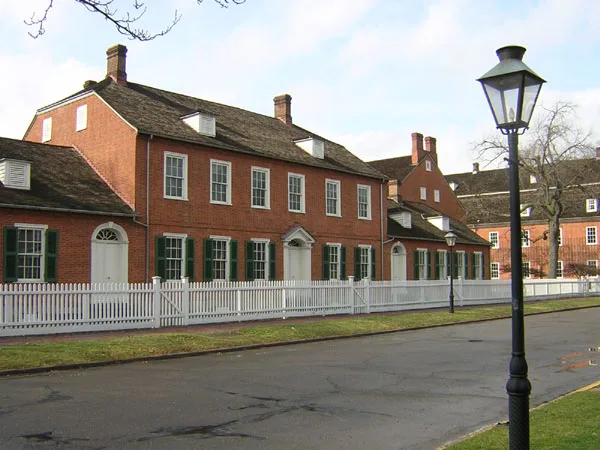
Along the Ohio River in Ambridge, Beaver County, Pennsylvania, the Economy historic district holds the remaining buildings of the Harmony Society, a German communitarian sect that settled there in 1825 and occupied the town until its dissolution in 1905. The grid of streets, laid out by the Harmonists, is lined with more than ninety Harmonist houses, mostly of locally made brick or wood lap siding, and a restored museum complex includes the Feast Hall, completed around 1828, and the Great House, built about 1826 for founder George Rapp and his adopted son Frederick. The Harmonist church, built from 1828 to 1831, is the district's most conspicuous building. The settlement is regarded as significant for its textile output of wool, cotton and silk, its use of steam power, and the financial and oil-related activities of the Society. Its planned town layout and early 19th-century construction methods are considered rare survivals.
Machine-generated summary. This summary was generated by a language model from the official nomination document and has not been reviewed line by line by an editor. It may contain errors. Check the source document before relying on any detail. Source: nomination document (PDF) · catalog entry. Generated October 2026 (model claude-haiku-5-5, prompt v1.1-2026-10-29).
| Period of significance | 1824-1905 |
|---|---|
| Areas of significance | Commerce, Religion, Social History |
| Acreage | 5 |
| Boundary source | NPS cultural-resource GIS polygon |
| Full listing page | Old Economy (property record) |
What listing means for this property
This is a historic district. Buildings within its boundary are either contributing (they add to the district's significance) or non-contributing. Owners of contributing income-producing buildings can claim the 20% federal rehabilitation tax credit; homeowners should look at state credits. National Register districts impose no design review by themselves; a local historic district ordinance, if one exists, does (the difference explained).
General information, not legal or tax advice. Rules change; confirm with your State Historic Preservation Office or a qualified adviser.