Old Allegheny Rows Historic District

Why it's listed
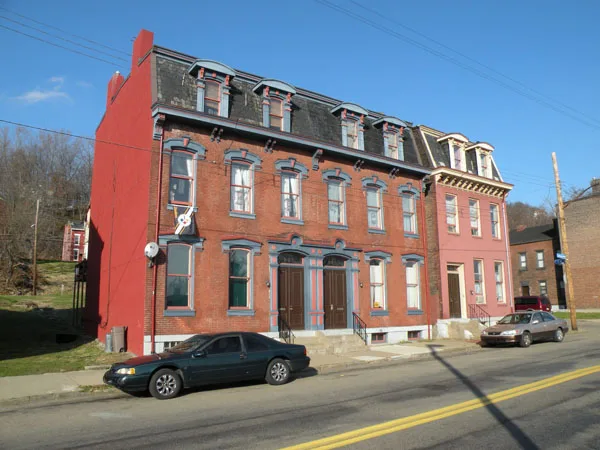
Old Allegheny Rows is a residential neighborhood of about 353 buildings in the California/Kirkbride area, across the Allegheny River from downtown Pittsburgh. Nearly all of it was built between 1870 and 1900, laid out on a street grid with a gentle rise toward the north. Most buildings are two- to three-story brick row houses, often with Mansard roofs, dormers, bracketed or corbelled cornices and stone or wood lintels. Styles include Richardson Romanesque, Italianate and Victorian vernacular. About a quarter of the buildings form a rental rowhouse development put up in 1892-93 by Pittsburgh industrialist Herbert DuPuy, with polychromed brick, stamped metal cornices and millwork porches. Three groups stand out: a row of four Richardson Romanesque houses, a row of fourteen Victorian vernacular houses, and the Art Deco New Brighton Theater of 1928. The district sits between the smaller, earlier Mexican War Streets and the grander Manchester houses, and its speculative character distinguishes it. Only five structures are intrusions.
Machine-generated summary. This summary was generated by a language model from the official nomination document and has not been reviewed line by line by an editor. It may contain errors. Check the source document before relying on any detail. Source: nomination document (PDF) · catalog entry. Generated October 2026 (model claude-sonnet-5-5, prompt v1.0-2026-10-29).
| Styles | Richardson Romanesque, Italianate, Victorian vernacular; Art Deco (New Brighton Theater) |
|---|---|
| Areas of significance | Architecture |
| Acreage | 27 |
| Boundary source | NPS cultural-resource GIS polygon |
| Full listing page | Old Allegheny Rows Historic District (property record) |
What listing means for this property
This is a historic district. Buildings within its boundary are either contributing (they add to the district's significance) or non-contributing. Owners of contributing income-producing buildings can claim the 20% federal rehabilitation tax credit; homeowners should look at state credits. National Register districts impose no design review by themselves; a local historic district ordinance, if one exists, does (the difference explained).
General information, not legal or tax advice. Rules change; confirm with your State Historic Preservation Office or a qualified adviser.