Okehocking Historic District

Why it's listed
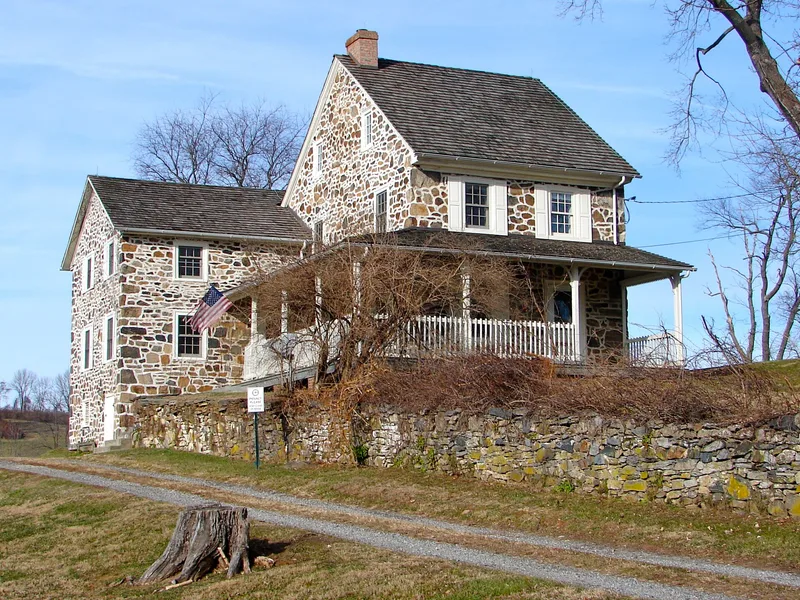
Rural district of 18th and early 19th century stone farmhouses, barns and mill sites in Willistown Township, Chester County, about six miles east of West Chester. It is centred on a 500-acre tract granted in 1703 to members of the Okehocking Lenape, who were not long in residence before the land reverted to the Proprietary in the 1720s. Quaker families including the Yarnalls, Smedleys and Garretts then farmed and milled the land, building houses with local stone, a meeting house completed by 1798, and a school. A former inn, the Rising Sun, operated from 1766 until about 1820. In 1913 Dr. Thomas Ashton assembled a 1400-acre estate called Delchester Farm, and other wealthy owners followed in the 1920s. The buildings and open farmland are regarded as a well-preserved record of how the area was settled, farmed and kept open over more than two centuries.
Machine-generated summary. This summary was generated by a language model from the official nomination document and has not been reviewed line by line by an editor. It may contain errors. Check the source document before relying on any detail. Source: nomination document (PDF) · catalog entry. Generated October 2026 (model claude-haiku-5-5, prompt v1.1-2026-10-29).
| Period of significance | 1700-1940 |
|---|---|
| Styles | Pennsylvania Colonial; Early Republican; Victorian; Late 19th and 20th Century Revivals |
| Areas of significance | Agriculture, Exploration/Settlement, Architecture |
| Acreage | 1400 |
| Boundary source | NPS cultural-resource GIS polygon |
| Full listing page | Okehocking Historic District (property record) |
What listing means for this property
This is a historic district. Buildings within its boundary are either contributing (they add to the district's significance) or non-contributing. Owners of contributing income-producing buildings can claim the 20% federal rehabilitation tax credit; homeowners should look at state credits. National Register districts impose no design review by themselves; a local historic district ordinance, if one exists, does (the difference explained).
General information, not legal or tax advice. Rules change; confirm with your State Historic Preservation Office or a qualified adviser.