Oakmont Country Club Historic District

Why it's listed
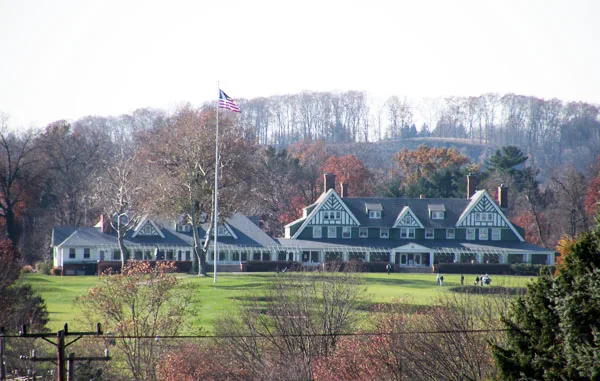
Laid out in 1903 near the town of Oakmont, Pennsylvania, on former pastureland with gravel and clay soil, this 18-hole course was built by a group of Pittsburgh golfers and designed by Henry C. Fownes, an amateur golfer. Its narrow fairways, large sloping greens and profusion of sand bunkers made it the first comprehensive example of penal golf architecture, and it is regarded as a prototype for later courses of that type. William C. Fownes Jr. later refined the course, especially its bunkering, between 1911 and 1948. The course has hosted 13 major national championships, including six U.S. Opens, more than any other course in the country. Its layout remains largely original, and the Tudor Revival clubhouse of 1904 and nearby 1930s buildings form the associated club complex.
Machine-generated summary. This summary was generated by a language model from the official nomination document and has not been reviewed line by line by an editor. It may contain errors. Check the source document before relying on any detail. Source: nomination document (PDF) · catalog entry. Generated October 2026 (model claude-haiku-5-5, prompt v1.1-2026-10-29).
| Period of significance | 1903 |
|---|---|
| Styles | Tudor Revival (clubhouse and related buildings) |
| Areas of significance | Landscape Architecture, Entertainment/Recreation |
| Acreage | 218 |
| Boundary source | NPS cultural-resource GIS polygon |
| Full listing page | Oakmont Country Club Historic District (property record) |
What listing means for this property
This is a historic district. Buildings within its boundary are either contributing (they add to the district's significance) or non-contributing. Owners of contributing income-producing buildings can claim the 20% federal rehabilitation tax credit; homeowners should look at state credits. National Register districts impose no design review by themselves; a local historic district ordinance, if one exists, does (the difference explained).
General information, not legal or tax advice. Rules change; confirm with your State Historic Preservation Office or a qualified adviser.