Oak Hall Historic District

Why it's listed
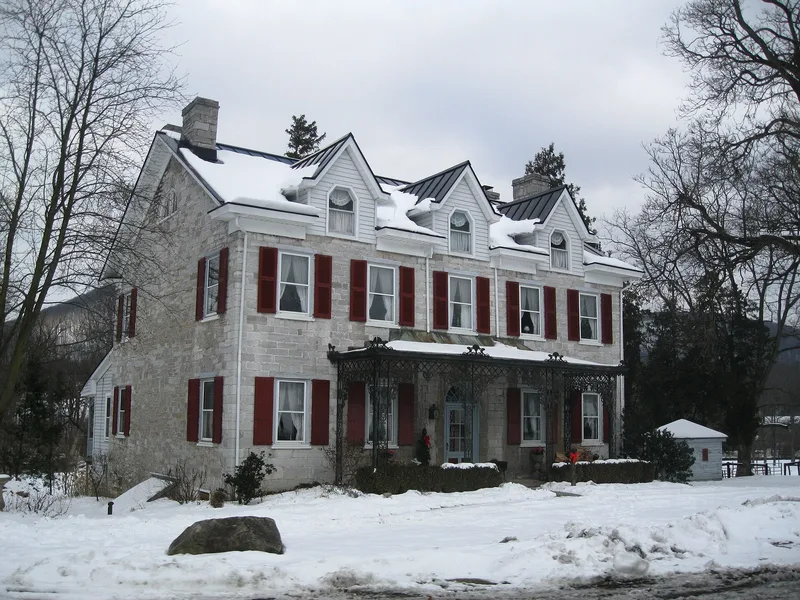
Oak Hall is a village in College Township, Centre County, Pennsylvania, and this district covers its western portion, built around the farm of General James Irvin. The centrepiece is the Irvin Mansion, a two-and-a-half-story limestone house begun around 1825 with a center hall plan and measuring 48 by 38 feet, one of the largest houses in the area at the time. Nearby stand a limestone barn of about the same date with a Palladian-style ventilator, and the foundation story of the Irvin grist mill, first built in 1822. Irvin, who began his career in Oak Hall as a miller and storekeeper, later became a prominent ironmaster and served in Congress from 1841 to 1845. The district also includes the Johnstonbaugh House, a vernacular dwelling with an early log section, and the Benjamin Peters House of about 1860. Together these buildings preserve the agricultural and milling character of the community after the 1971 highway project removed its core.
Machine-generated summary. This summary was generated by a language model from the official nomination document and has not been reviewed line by line by an editor. It may contain errors. Check the source document before relying on any detail. Source: nomination document (PDF) · catalog entry. Generated October 2026 (model claude-haiku-5-5, prompt v1.1-2026-10-29).
| Period of significance | 1800-1899 |
|---|---|
| Styles | Georgian and Victorian elements; traditional center hall plan |
| Areas of significance | Agriculture, Architecture, Social History |
| Acreage | 35 |
| Boundary source | NPS cultural-resource GIS polygon |
| Full listing page | Oak Hall Historic District (property record) |
What listing means for this property
This is a historic district. Buildings within its boundary are either contributing (they add to the district's significance) or non-contributing. Owners of contributing income-producing buildings can claim the 20% federal rehabilitation tax credit; homeowners should look at state credits. National Register districts impose no design review by themselves; a local historic district ordinance, if one exists, does (the difference explained).
General information, not legal or tax advice. Rules change; confirm with your State Historic Preservation Office or a qualified adviser.