Northern Liberties Historic District

Why it's listed
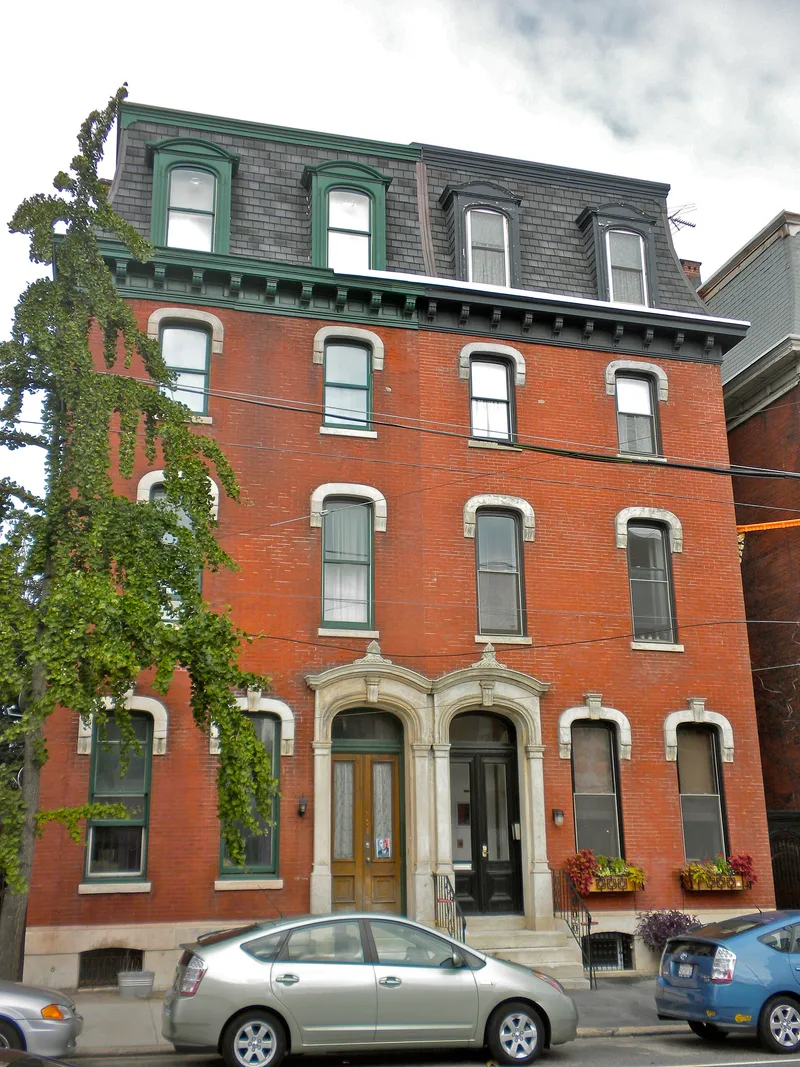
Centred on Fairmount Avenue in Philadelphia, the Northern Liberties district grew from a township incorporated in 1791 into a mix of houses, workshops, mills and churches. From about 1860 the area west of Second Street became a centre of German residence, craft industry and institutions, and by the 1870s small skilled businesses dominated its streets. The Salem German Reformed Church, erected in 1873, stands behind a row of Italianate brick townhouses on the 300 block of Fairmount and recreates the urban form of German communities. Other notable buildings include the Federal and Greek Revival rows on the 500 block, the 1911 Zimmerman meat packing building with terra cotta bull heads, and the Integrity Trust building. The district is valued for the way houses, shops and workplaces remained intertwined, and for surviving with more integrity than the large industrial corridors of the period.
Machine-generated summary. This summary was generated by a language model from the official nomination document and has not been reviewed line by line by an editor. It may contain errors. Check the source document before relying on any detail. Source: nomination document (PDF) · catalog entry. Generated October 2026 (model claude-haiku-5-5, prompt v1.1-2026-10-29).
| Period of significance | 1793-1935 |
|---|---|
| Areas of significance | Industry, Commerce, Architecture |
| Acreage | 20.5 |
| Boundary source | NPS cultural-resource GIS polygon |
| Full listing page | Northern Liberties Historic District (property record) |
What listing means for this property
This is a historic district. Buildings within its boundary are either contributing (they add to the district's significance) or non-contributing. Owners of contributing income-producing buildings can claim the 20% federal rehabilitation tax credit; homeowners should look at state credits. National Register districts impose no design review by themselves; a local historic district ordinance, if one exists, does (the difference explained).
General information, not legal or tax advice. Rules change; confirm with your State Historic Preservation Office or a qualified adviser.