Newtown Historic District (Boundary Increase)

Why it's listed
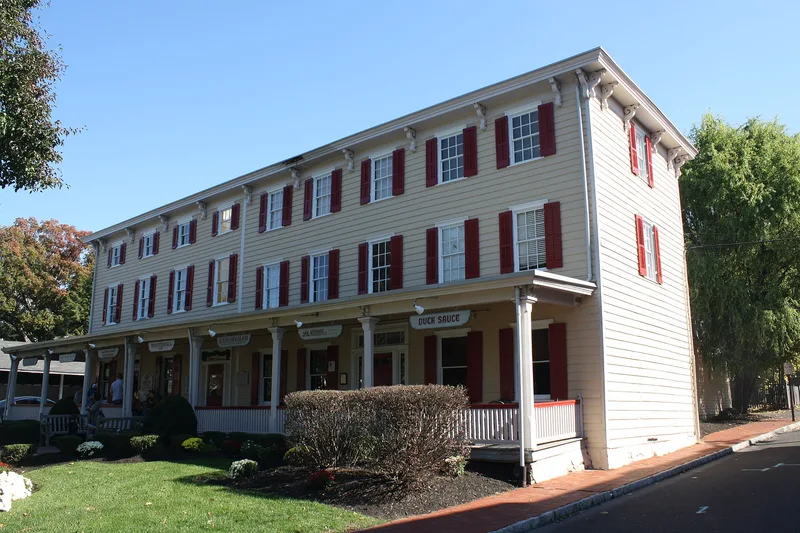
Along Sycamore Street in Newtown, Bucks County, Pennsylvania, a group of eighteenth and nineteenth century houses, cabins, and commercial buildings lines the edge of the former Newtown Common. The extension contains fifty-five buildings dating from about 1800 to 1970, with three rated significant, forty contributing, and twelve intrusive. Most are two-and-a-half-story frame dwellings with gable roofs, and thirteen are stone, including settler's cabins of one and a half to one and three-quarter stories that survive from the earliest period. The common was divided and sold as fifty-five small lots in 1796, and the street grew as a residential and commercial route subordinate to State Street. Its significance rests on its surviving town lot and farmstead pattern and its ties to the Revolutionary War, including use as a headquarters for George Washington and the only recorded combat in Bucks County, in February 1778. Newtown also served as county seat from 1724 to 1813.
Machine-generated summary. This summary was generated by a language model from the official nomination document and has not been reviewed line by line by an editor. It may contain errors. Check the source document before relying on any detail. Source: nomination document (PDF) · catalog entry. Generated October 2026 (model claude-haiku-5-5, prompt v1.1-2026-10-29).
| Period of significance | 1683-1935 |
|---|---|
| Styles | Vernacular |
| Areas of significance | Community Planning and Development, Military, Exploration/Settlement, Politics/Government, Architecture |
| Acreage | 22.9 |
| Boundary source | NPS cultural-resource GIS polygon |
| Full listing page | Newtown Historic District (Boundary Increase) (property record) |
What listing means for this property
This is a historic district. Buildings within its boundary are either contributing (they add to the district's significance) or non-contributing. Owners of contributing income-producing buildings can claim the 20% federal rehabilitation tax credit; homeowners should look at state credits. National Register districts impose no design review by themselves; a local historic district ordinance, if one exists, does (the difference explained).
General information, not legal or tax advice. Rules change; confirm with your State Historic Preservation Office or a qualified adviser.