Newmyer, Peter and Jonathan, Farm

Why it's listed
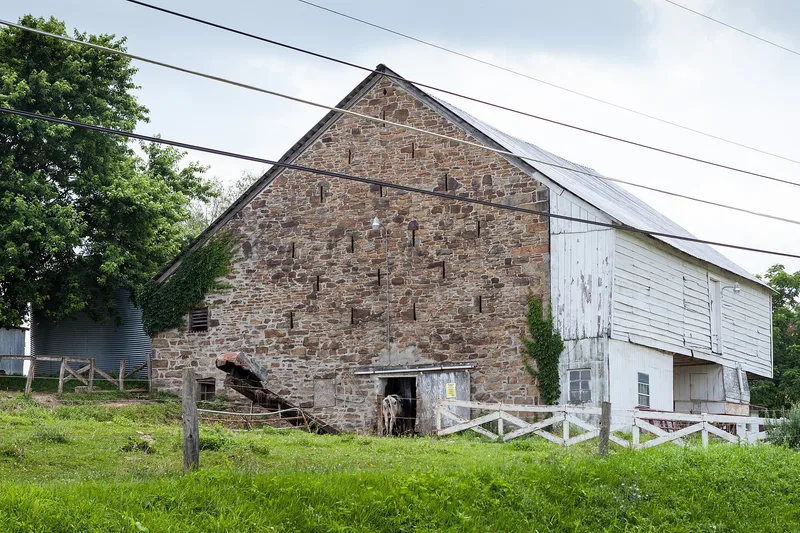
Set into a hillside east of Richey Road in Bullskin Township, the Newmyer Farm combines a brick Federal style house and a stone bank barn with several historic outbuildings. Peter Newmyer, a German-born farmer, began acquiring the land in January 1794, eventually assembling more than 400 acres. The barn is dated to about 1794 to 1798, and the main house to about 1812 to 1822. The house has a center hall plan, a fanlight doorway with fluted pilasters and fretwork, and carved mantels in its dining room and parlors. The property is valued for its architecture and for its record of family farming. Jonathan Newmyer, Peter's son, acquired the farm in 1837 after a contract arrangement that kept the land intact within the family. The farm remained in continuous family operation through 1947. Its stone barn is regarded as rare in southwestern Pennsylvania.
Machine-generated summary. This summary was generated by a language model from the official nomination document and has not been reviewed line by line by an editor. It may contain errors. Check the source document before relying on any detail. Source: nomination document (PDF) · catalog entry. Generated October 2026 (model claude-haiku-5-5, prompt v1.1-2026-10-29).
| Period of significance | 1794-1947 |
|---|---|
| Styles | Federal style |
| Areas of significance | Architecture |
| Acreage | 54 |
| Boundary source | NPS cultural-resource GIS polygon |
| Full listing page | Newmyer, Peter and Jonathan, Farm (property record) |
What listing means for this property
This is a historic district. Buildings within its boundary are either contributing (they add to the district's significance) or non-contributing. Owners of contributing income-producing buildings can claim the 20% federal rehabilitation tax credit; homeowners should look at state credits. National Register districts impose no design review by themselves; a local historic district ordinance, if one exists, does (the difference explained).
General information, not legal or tax advice. Rules change; confirm with your State Historic Preservation Office or a qualified adviser.