New Kensington Production Works Historic District
Why it's listed
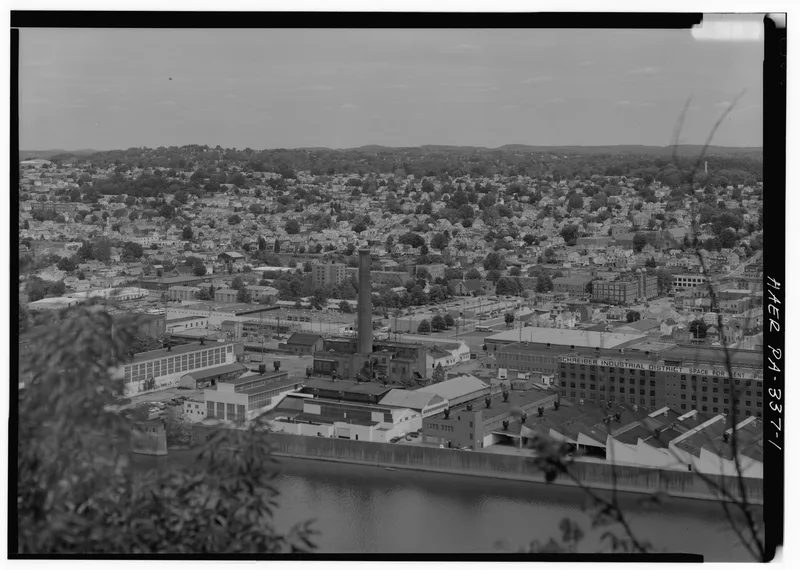
Along the Allegheny River in New Kensington and Arnold, Pennsylvania, the district covers more than 60 acres of aluminum manufacturing buildings erected between 1899 and 1947. Most are brick or corrugated metal on steel frames, ranging from one to six stories, with flat, gable, clerestory or sawtooth roofs chosen for their production uses. The Pittsburgh Reduction Company moved its operations here in the early 1890s, after receiving land and cash incentives from the Burrell Improvement Company. The plant produced sheet, rod, wire, tubing, foil, cookware and bronze powder, and later the Kensington-Ware line of Art Deco aluminum pieces. It is regarded as the first aluminum production works of its kind in the United States and as the original Alcoa plant, where methods were developed and then passed on to other plants. The buildings also show the layout and equipment of early twentieth century aluminum manufacturing, which is why the district is listed.
Machine-generated summary. This summary was generated by a language model from the official nomination document and has not been reviewed line by line by an editor. It may contain errors. Check the source document before relying on any detail. Source: nomination document (PDF) · catalog entry. Generated October 2026 (model claude-haiku-5-5, prompt v1.1-2026-10-29).
| Period of significance | 1899-1947 |
|---|---|
| Styles | Other: no style; industrial vernacular style |
| Areas of significance | Architecture, Industry |
| Acreage | 60 |
| Boundary source | NPS cultural-resource GIS polygon |
| Full listing page | New Kensington Production Works Historic District (property record) |
What listing means for this property
This is a historic district. Buildings within its boundary are either contributing (they add to the district's significance) or non-contributing. Owners of contributing income-producing buildings can claim the 20% federal rehabilitation tax credit; homeowners should look at state credits. National Register districts impose no design review by themselves; a local historic district ordinance, if one exists, does (the difference explained).
General information, not legal or tax advice. Rules change; confirm with your State Historic Preservation Office or a qualified adviser.