Nazareth Historic District

Why it's listed
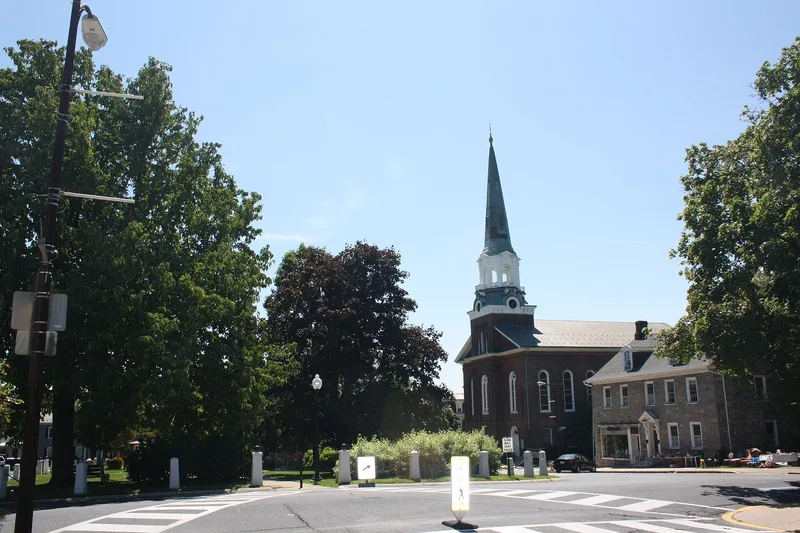
Nazareth's historic district occupies the center of the borough in northeastern Pennsylvania, on a hillside sloping southeast. Moravian settlers founded the community in the mid-eighteenth century as a planned religious settlement closed to non-Moravians, and their stone and timber buildings survive, including the 1755-1756 Manor House with its gambrel roof and cupola. The Moravian Church of 1861 and St. John's U.C.C. Church, built 1905-1907, are notable churches. The Moravians opened the town in 1858, after which population grew from about 1,000 in 1880 to over 3,000 by 1930. Cement plants and textile mills drew workers, and many of the roughly 510 contributing buildings were built for them. Queen Anne, Colonial Revival and Bungalow houses form a large high style collection, and the district served as the central commercial hub of the county.
Machine-generated summary. This summary was generated by a language model from the official nomination document and has not been reviewed line by line by an editor. It may contain errors. Check the source document before relying on any detail. Source: nomination document (PDF) · catalog entry. Generated October 2026 (model claude-haiku-5-5, prompt v1.1-2026-10-29).
| Period of significance | 1740-1938 |
|---|---|
| Styles | Queen Anne; Colonial Revival; Bungalow/Craftsman; Moravian; Romanesque Revival; Gothic Revival |
| Areas of significance | Community Planning and Development, Commerce, Education, Architecture, Religion |
| Acreage | 188 |
| Boundary source | NPS cultural-resource GIS polygon |
| Full listing page | Nazareth Historic District (property record) |
What listing means for this property
This is a historic district. Buildings within its boundary are either contributing (they add to the district's significance) or non-contributing. Owners of contributing income-producing buildings can claim the 20% federal rehabilitation tax credit; homeowners should look at state credits. National Register districts impose no design review by themselves; a local historic district ordinance, if one exists, does (the difference explained).
General information, not legal or tax advice. Rules change; confirm with your State Historic Preservation Office or a qualified adviser.