Milanville Historic District

Why it's listed
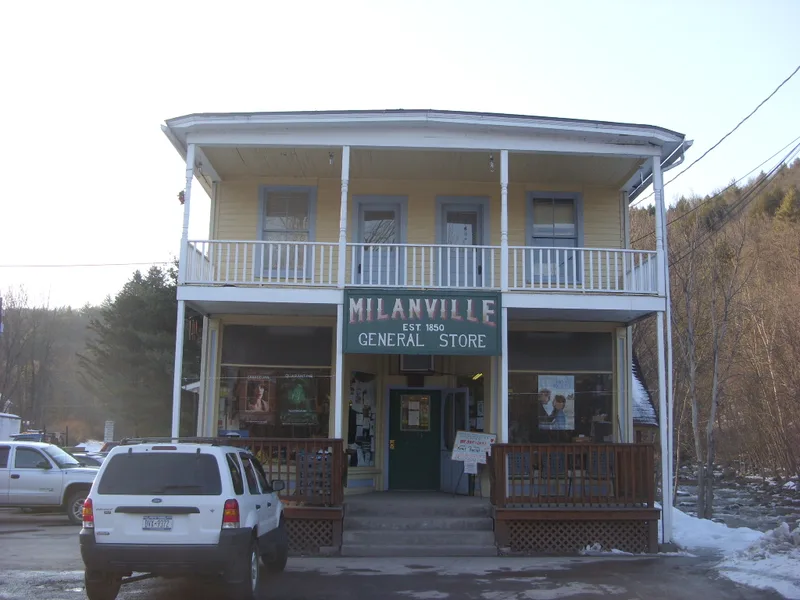
Milanville is a village of wood-frame houses, a store and a schoolhouse built mostly between 1850 and 1910, set along River Road where Calkins Creek meets the Delaware River in Wayne County. The earliest surviving building is the Nathan Skinner House, framed at Tammany Flats and floated downstream on timber rafts in 1815. The Skinner family, who owned the village sawmill, were the valley's leading lumbering and timber rafting family, and Calvin Skinner gave the village its name. The Beach family ran the tannery, which produced leather for industrial belts. After the hemlock supply was exhausted, the tannery became an acid factory producing charcoal, wood alcohol and chemicals for explosives during World War I. The mills and factory are gone, but the residences and the Milanville Store, which kept its traditional function, still reflect those industries. The district is valued for its concentration of vernacular houses in Greek Revival and Victorian styles, and for its largely unchanged rural setting.
Machine-generated summary. This summary was generated by a language model from the official nomination document and has not been reviewed line by line by an editor. It may contain errors. Check the source document before relying on any detail. Source: nomination document (PDF) · catalog entry. Generated October 2026 (model claude-haiku-5-5, prompt v1.1-2026-10-29).
| Period of significance | 1815-c.1920 |
|---|---|
| Styles | Mid-19th Century/Greek Revival; Late Victorian/Queen Anne/Eastlake |
| Areas of significance | Industry, Architecture |
| Acreage | 20 |
| Boundary source | NPS cultural-resource GIS polygon |
| Full listing page | Milanville Historic District (property record) |
What listing means for this property
This is a historic district. Buildings within its boundary are either contributing (they add to the district's significance) or non-contributing. Owners of contributing income-producing buildings can claim the 20% federal rehabilitation tax credit; homeowners should look at state credits. National Register districts impose no design review by themselves; a local historic district ordinance, if one exists, does (the difference explained).
General information, not legal or tax advice. Rules change; confirm with your State Historic Preservation Office or a qualified adviser.