Marshallton Historic District

Why it's listed
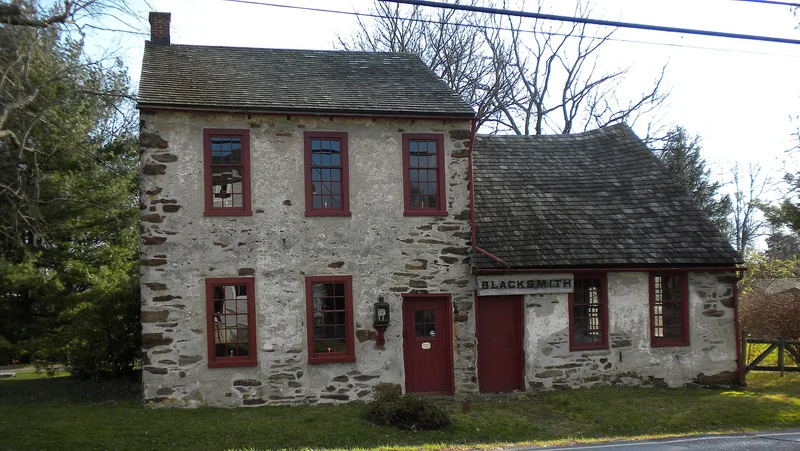
Marshallton is a village of 71 principal buildings strung along Strasburg Road in central Chester County, Pennsylvania, four miles west of West Chester. Its growth began in the 1760s around the Center House inn, which Joseph Martin opened as a public house for travelers, and it expanded into a linear village as the road became a major route between Philadelphia and Lancaster County around 1790 to 1810. Its significance rests on that connection to the road, on its concentration of inns, stores, shops and cottage industries serving farmers and travelers, and on a cohesive group of mostly 18th and 19th century buildings. The Humphry Marshall house, dated 1773, and the Bradford Friends Meetinghouse, dating from 1765, illustrate Georgian and Colonial building traditions. The Marshallton Inn, built as a hotel in 1814, is one of the best preserved commercial buildings in the village. Sixty-seven buildings contribute to the district's historical and architectural character.
Machine-generated summary. This summary was generated by a language model from the official nomination document and has not been reviewed line by line by an editor. It may contain errors. Check the source document before relying on any detail. Source: nomination document (PDF) · catalog entry. Generated October 2026 (model claude-haiku-5-5, prompt v1.1-2026-10-29).
| Period of significance | 1765-1930 |
|---|---|
| Styles | Vernacular; Georgian; Federal vernacular; Penn Plan; Georgian Revival; Rural Gothic; Queen Anne; Colonial |
| Areas of significance | Commerce, Transportation, Architecture |
| Acreage | 102 |
| Boundary source | NPS cultural-resource GIS polygon |
| Full listing page | Marshallton Historic District (property record) |
What listing means for this property
This is a historic district. Buildings within its boundary are either contributing (they add to the district's significance) or non-contributing. Owners of contributing income-producing buildings can claim the 20% federal rehabilitation tax credit; homeowners should look at state credits. National Register districts impose no design review by themselves; a local historic district ordinance, if one exists, does (the difference explained).
General information, not legal or tax advice. Rules change; confirm with your State Historic Preservation Office or a qualified adviser.