Marklesburg Historic District

Why it's listed
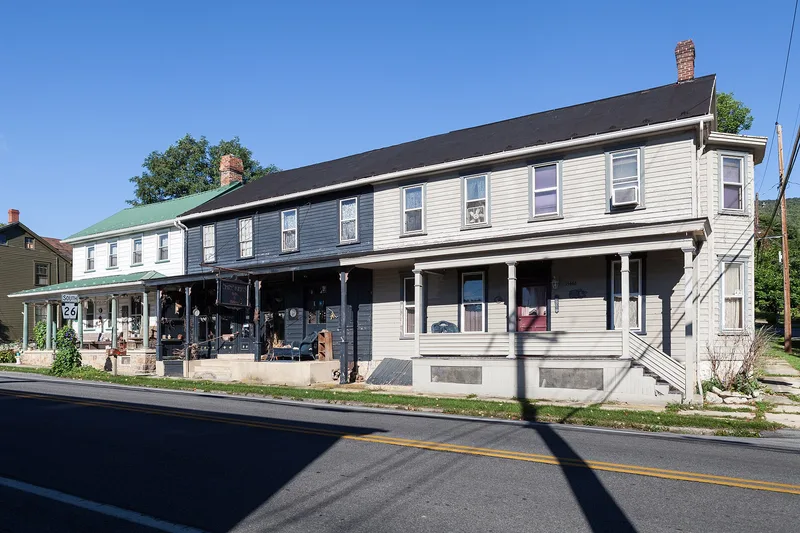
Marklesburg is a linear village along Bedford Road in the Woodcock Valley of central Pennsylvania, laid out in 1844 with a single row of lots on each side of the road and service alleys behind them. Most of its 61 buildings date from about 1845 to 1870, and many are log or frame houses with clapboard siding that also served as shops, hotels or offices. The village grew as a market and wagon stop, and after 1855 it benefited from the Huntingdon and Broad Top Railroad, which carried coal, iron and agricultural goods. By 1876 it had three stores, a carriage factory, blacksmiths, a harness shop, cobblers, cabinetmakers, a cooper, a gunsmith and two hotels. Its institutional buildings include St. Matthew's Lutheran Church, organized in 1804, and the former Methodist Episcopal Church, built about 1854. The district is significant for its commercial role and for the regional vernacular architecture that shows how a small Ridge and Valley service center developed.
Machine-generated summary. This summary was generated by a language model from the official nomination document and has not been reviewed line by line by an editor. It may contain errors. Check the source document before relying on any detail. Source: nomination document (PDF) · catalog entry. Generated October 2026 (model claude-haiku-5-5, prompt v1.1-2026-10-29).
| Period of significance | 1844-1900 |
|---|---|
| Styles | Mid-19th Century/Gothic Revival; vernacular with Georgian, double-pile and Gothic Revival characteristics |
| Areas of significance | Architecture, Commerce |
| Acreage | 35 |
| Boundary source | NPS cultural-resource GIS polygon |
| Full listing page | Marklesburg Historic District (property record) |
What listing means for this property
This is a historic district. Buildings within its boundary are either contributing (they add to the district's significance) or non-contributing. Owners of contributing income-producing buildings can claim the 20% federal rehabilitation tax credit; homeowners should look at state credits. National Register districts impose no design review by themselves; a local historic district ordinance, if one exists, does (the difference explained).
General information, not legal or tax advice. Rules change; confirm with your State Historic Preservation Office or a qualified adviser.