Marianna Historic District

Why it's listed
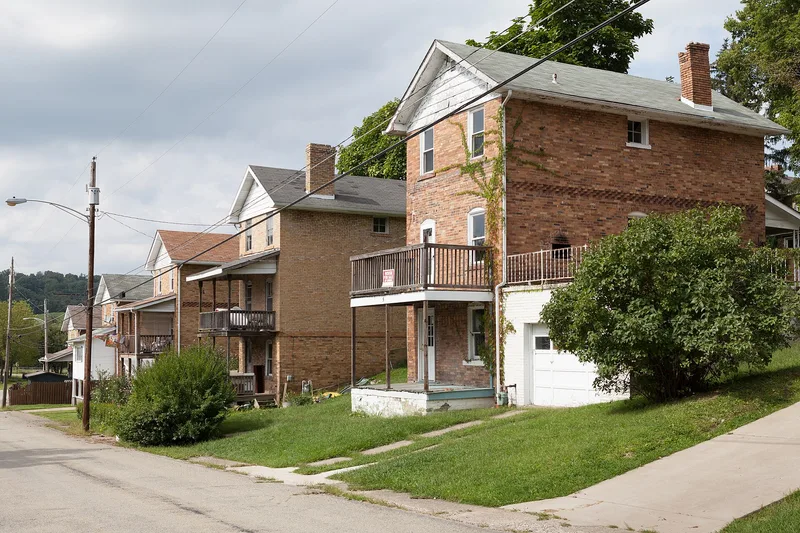
Marianna is a company-built coal mining town on a hillside above Ten Mile Creek in Washington County, Pennsylvania, with most of its buildings constructed between 1906 and 1912 for the Marianna mine. Rows of mostly yellow brick houses branch off Beeson Avenue, the main street, and are arranged around the mine, company store, schoolhouse and other institutional buildings. The district is significant for its company housing, which reflects both the economics of mining operations and the efforts of coal operators to improve living conditions. It is linked to the Jones family, who developed the mine with the aim of building one of the most up-to-date plants in the world. Marianna was incorporated as a borough in 1910, and the district is notable for its unusually good integrity, since its brick construction resisted the re-siding common in other mining towns. Its uniform architecture and compact layout make it one of the best preserved examples of a Western Pennsylvania mining town.
Machine-generated summary. This summary was generated by a language model from the official nomination document and has not been reviewed line by line by an editor. It may contain errors. Check the source document before relying on any detail. Source: nomination document (PDF) · catalog entry. Generated October 2026 (model claude-haiku-5-5, prompt v1.1-2026-10-29).
| Period of significance | 1906-1912 |
|---|---|
| Areas of significance | Industry, Community Planning and Development, Social History |
| Acreage | 128.6 |
| Boundary source | NPS cultural-resource GIS polygon |
| Full listing page | Marianna Historic District (property record) |
What listing means for this property
This is a historic district. Buildings within its boundary are either contributing (they add to the district's significance) or non-contributing. Owners of contributing income-producing buildings can claim the 20% federal rehabilitation tax credit; homeowners should look at state credits. National Register districts impose no design review by themselves; a local historic district ordinance, if one exists, does (the difference explained).
General information, not legal or tax advice. Rules change; confirm with your State Historic Preservation Office or a qualified adviser.