Linden Hall Historic District

Why it's listed
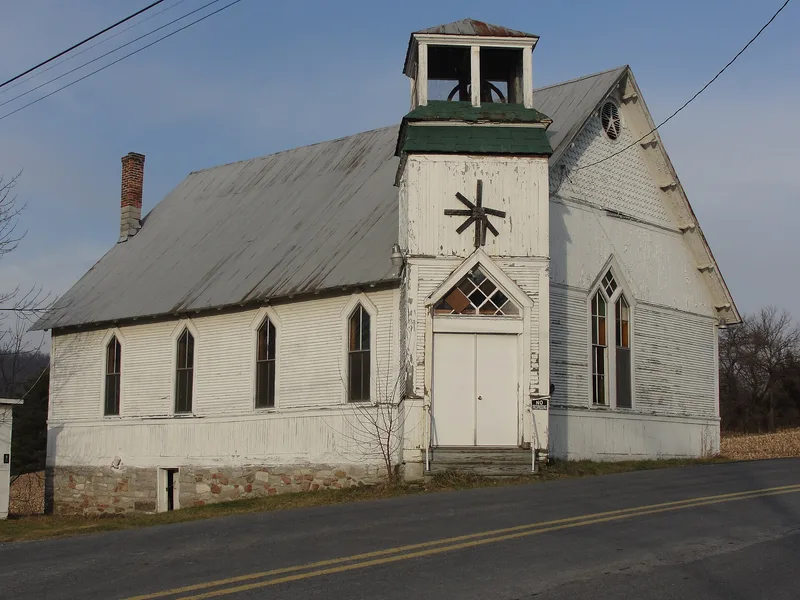
Linden Hall is a rural village in eastern Harris Township, Centre County, that grew around a grist mill built on Cedar Creek by John Irvin in 1808. Its houses, barns, a church, a school and a small cemetery were built mostly between 1810 and 1919, along Rock Hill and Brush Valley roads. Most of the dwellings are frame or plank, two and a half stories tall, with gable roofs and a modest scale. Two brick Federal-style houses, including Irvin's 1810 house overlooking the mill pond, are the main exceptions. The village was shaped by the arrival of a railroad branch in 1885, which brought a local building boom tied to nearby lumbering. It is regarded as a representative example of a small mill village in central Pennsylvania. Its significance lies in the retention of vernacular buildings with high integrity, spanning more than a century of construction and showing a range of architectural styles. Few intrusions have been built, and the village has remained largely unchanged.
Machine-generated summary. This summary was generated by a language model from the official nomination document and has not been reviewed line by line by an editor. It may contain errors. Check the source document before relying on any detail. Source: nomination document (PDF) · catalog entry. Generated October 2026 (model claude-haiku-5-5, prompt v1.1-2026-10-29).
| Period of significance | 1810-1919 |
|---|---|
| Styles | Federal; Gothic Revival; vernacular |
| Areas of significance | Architecture |
| Acreage | 35 |
| Boundary source | NPS cultural-resource GIS polygon |
| Full listing page | Linden Hall Historic District (property record) |
What listing means for this property
This is a historic district. Buildings within its boundary are either contributing (they add to the district's significance) or non-contributing. Owners of contributing income-producing buildings can claim the 20% federal rehabilitation tax credit; homeowners should look at state credits. National Register districts impose no design review by themselves; a local historic district ordinance, if one exists, does (the difference explained).
General information, not legal or tax advice. Rules change; confirm with your State Historic Preservation Office or a qualified adviser.