Ligonier Historic District

Why it's listed
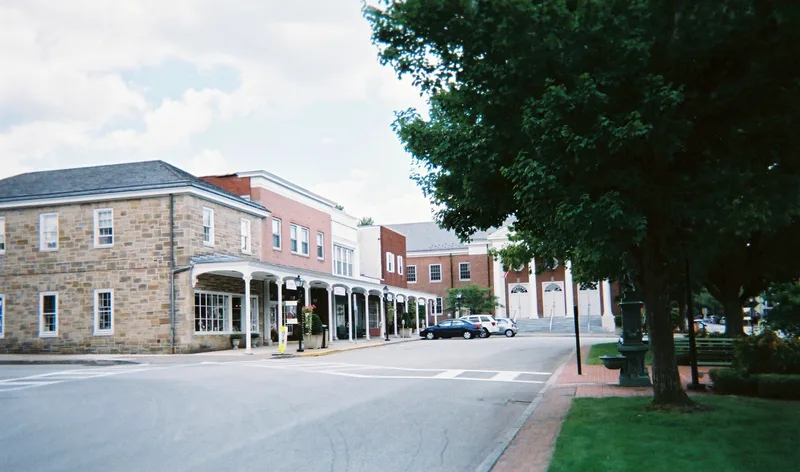
Ligonier, a borough of about 1,900 in the Ligonier Valley, grew around a diamond-and-gridiron plan laid out in 1817 by Col. John Ramsey on the Philadelphia-Pittsburgh Turnpike. The district holds 519 properties, 81 percent of them contributing, spanning construction from about 1790 to 1944. Early buildings include the William Ashcom House, a c. 1790 I-House that served as a dwelling and cobbler's shop, and the Bates McColly House, a c. 1826 brick I-House with Flemish bond facade brickwork. The arrival of the Ligonier Valley Railroad in 1878 brought an 1870 to 1920 building boom, when the population nearly quadrupled between 1878 and 1900 and lumber, stone, and iron ore moved through the town. Its later Queen Anne, Gothic Revival, and Four-Square houses, along with worker and middle-class neighborhoods, document this prosperous period. The district is valued for its intact layers of 18th- through early 20th-century buildings and transportation history.
Machine-generated summary. This summary was generated by a language model from the official nomination document and has not been reviewed line by line by an editor. It may contain errors. Check the source document before relying on any detail. Source: nomination document (PDF) · catalog entry. Generated October 2026 (model claude-haiku-5-5, prompt v1.1-2026-10-29).
| Period of significance | C. 1790-1944 |
|---|---|
| Styles | Gable-Front, I-House, Center-Hall Georgian; Federal; Queen Anne, Gothic Revival; Bungalow, Craftsman |
| Areas of significance | Transportation, Commerce, Architecture |
| Acreage | 166 |
| Boundary source | NPS cultural-resource GIS polygon |
| Full listing page | Ligonier Historic District (property record) |
What listing means for this property
This is a historic district. Buildings within its boundary are either contributing (they add to the district's significance) or non-contributing. Owners of contributing income-producing buildings can claim the 20% federal rehabilitation tax credit; homeowners should look at state credits. National Register districts impose no design review by themselves; a local historic district ordinance, if one exists, does (the difference explained).
General information, not legal or tax advice. Rules change; confirm with your State Historic Preservation Office or a qualified adviser.