Lemont Historic District

Why it's listed
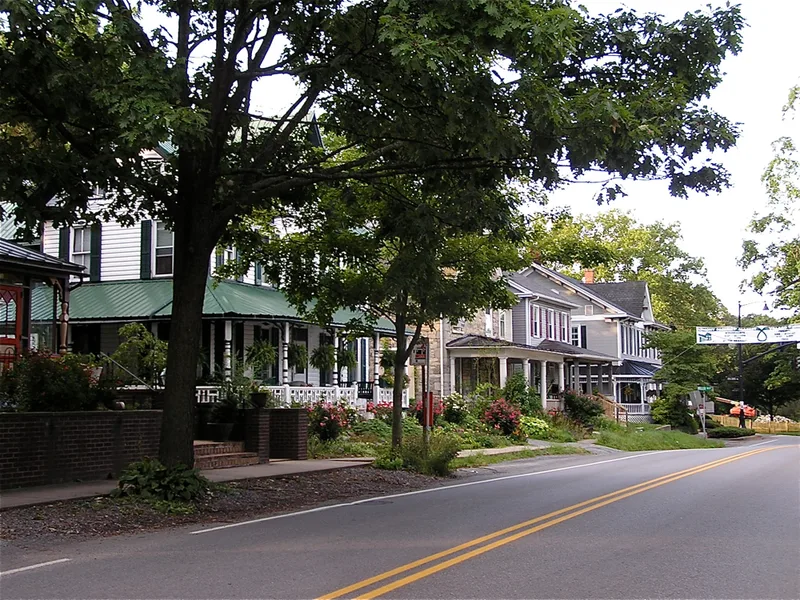
Lemont is a village at the southwestern foot of Nittany Mountain, divided by Spring Creek, with a street plan laid out by Moses Thompson in 1870. Its location at the crossroads of four early Centre County roads made it a transportation and commercial center. The district contains eighty-one principal structures and thirty-three outbuildings, most built in the second half of the nineteenth century. Victorian vernacular houses with steep cross gables predominate, alongside Georgian folk houses from earlier decades and brick cube houses from the early twentieth century. Notable buildings include the Thompson and Company Bank Building of 1868, the Dr. J.Y. Dale House of 1871, which was enlarged in the Queen Anne and Eastlake modes, and the John I. Thompson, Jr., House, remodeled in the 1880s in the Neo-Colonial mode. The village is valued as a well-preserved example of a late nineteenth century roadside village whose layout reflects the railway and highway traffic that shaped it.
Machine-generated summary. This summary was generated by a language model from the official nomination document and has not been reviewed line by line by an editor. It may contain errors. Check the source document before relying on any detail. Source: nomination document (PDF) · catalog entry. Generated October 2026 (model claude-haiku-5-5, prompt v1.1-2026-10-29).
| Period of significance | 1870-1920 |
|---|---|
| Styles | Vernacular Victorian, Gothic, Italianate, Queen Anne, Neo-Colonial, Georgian, Eclectic Cube, Bungalow |
| Areas of significance | Transportation, Architecture |
| Acreage | 41.7 |
| Boundary source | NPS cultural-resource GIS polygon |
| Full listing page | Lemont Historic District (property record) |
What listing means for this property
This is a historic district. Buildings within its boundary are either contributing (they add to the district's significance) or non-contributing. Owners of contributing income-producing buildings can claim the 20% federal rehabilitation tax credit; homeowners should look at state credits. National Register districts impose no design review by themselves; a local historic district ordinance, if one exists, does (the difference explained).
General information, not legal or tax advice. Rules change; confirm with your State Historic Preservation Office or a qualified adviser.