Knickerbocker Historic District

Why it's listed
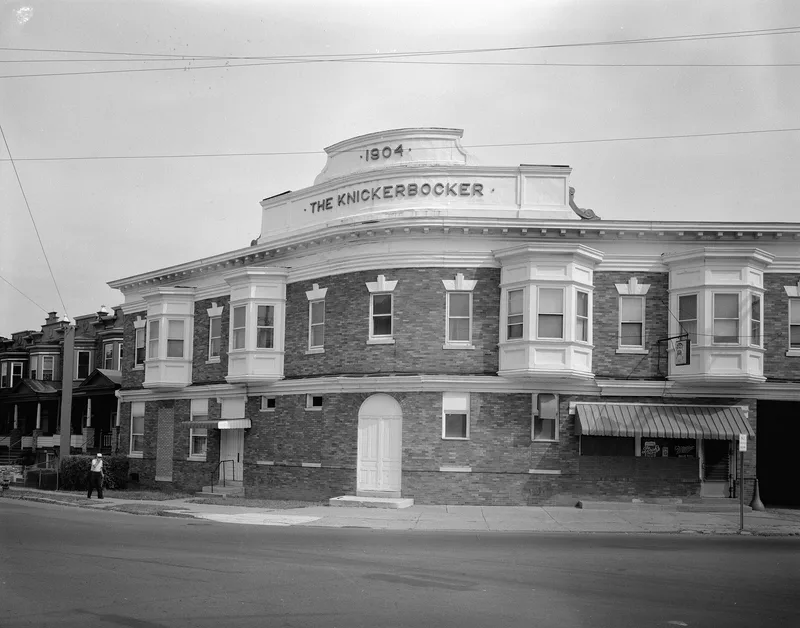
Rowhouses built between 1904 and about 1930 form the Knickerbocker Historic District in southeastern Altoona, Blair County. Two-story brick units with paired entrances, pressed metal cornices, semi-octagonal bay windows and stained glass transoms line Burgoon Road and 4th, 5th and 6th Avenues. The Knickerbocker Hotel, completed around 1906, anchors the group at the junction of Burgoon Road and 6th Avenue, where a curved commercial block carries the name and the date 1904 on its parapet. The Knickerbocker Contracting Company, of Philadelphia, built the rows, which were planned for rental housing near the Pennsylvania Railroad South Altoona shops. Most early residents worked for the railroad. The district is regarded as Altoona's largest and most stylized rowhouse complex, and it is the only place in the city where whole blocks consist of planned rowhouses. Its design reflects the transition from Italianate to Neo-Classical Revival styling in working-class housing of the period.
Machine-generated summary. This summary was generated by a language model from the official nomination document and has not been reviewed line by line by an editor. It may contain errors. Check the source document before relying on any detail. Source: nomination document (PDF) · catalog entry. Generated October 2026 (model claude-haiku-5-5, prompt v1.1-2026-10-29).
| Period of significance | 1904-ca. 1930 |
|---|---|
| Styles | Late 19th and 20th Century Revivals; Colonial Revival and Neoclassical detailing |
| Areas of significance | Architecture |
| Acreage | 13.5 |
| Boundary source | NPS cultural-resource GIS polygon |
| Full listing page | Knickerbocker Historic District (property record) |
What listing means for this property
This is a historic district. Buildings within its boundary are either contributing (they add to the district's significance) or non-contributing. Owners of contributing income-producing buildings can claim the 20% federal rehabilitation tax credit; homeowners should look at state credits. National Register districts impose no design review by themselves; a local historic district ordinance, if one exists, does (the difference explained).
General information, not legal or tax advice. Rules change; confirm with your State Historic Preservation Office or a qualified adviser.