Kimberton Village Historic District

The National Park Service has not published a boundary polygon for this district; the map shows the listed properties inside it and the district's reference point.
Why it's listed
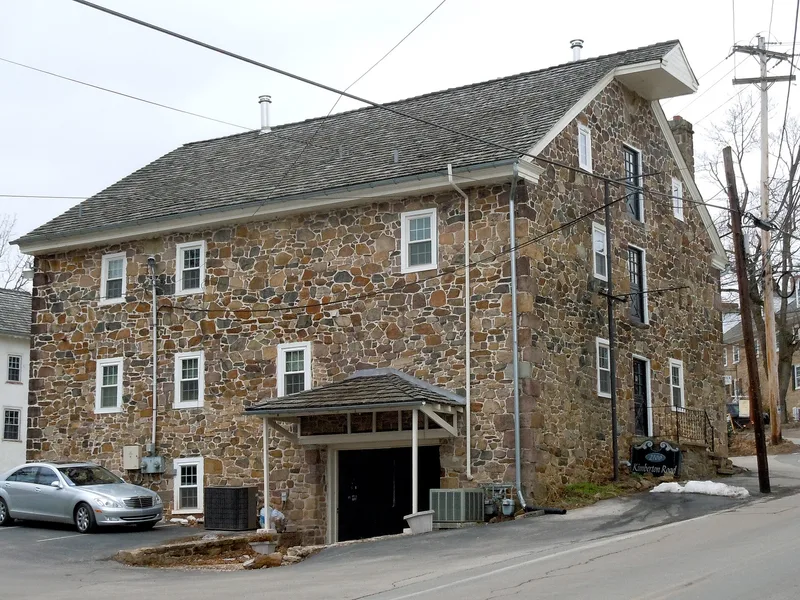
Kimberton Village is a crossroads settlement in Pikeland Township, Chester County, Pennsylvania, made up of three surviving buildings. The tavern, a white stucco-over-stone structure, was built by George Chrisman, probably after 1750, and was licensed in 1771 as a tavern called the Sign of the Bear. During the Revolution it was a resting place for armies moving between Valley Forge and an army hospital. The grist mill, of random fieldstone with a datestone reading 1796, was also built by Chrisman. The boarding school grew from a first phase possibly built in 1787. Under Quaker schoolmaster Emmor Kimber, from 1817, it became known for a liberal atmosphere, open to students of all religious denominations and drawing pupils from as far as the West Indies. Kimber was also an antislavery figure, and his daughter Abigail later attended the 1840 London anti-slavery convention.
Machine-generated summary. This summary was generated by a language model from the official nomination document and has not been reviewed line by line by an editor. It may contain errors. Check the source document before relying on any detail. Source: nomination document (PDF) · catalog entry. Generated October 2026 (model claude-haiku-5-5, prompt v1.1-2026-10-29).
| Period of significance | 18th Century-19th Century |
|---|---|
| Areas of significance | Commerce, Education, Architecture |
| Acreage | 4 |
| Boundary source | not published |
| Full listing page | Kimberton Village Historic District (property record) |
What listing means for this property
This is a historic district. Buildings within its boundary are either contributing (they add to the district's significance) or non-contributing. Owners of contributing income-producing buildings can claim the 20% federal rehabilitation tax credit; homeowners should look at state credits. National Register districts impose no design review by themselves; a local historic district ordinance, if one exists, does (the difference explained).
General information, not legal or tax advice. Rules change; confirm with your State Historic Preservation Office or a qualified adviser.