Kimberton Historic District (Boundary Increase)

Why it's listed
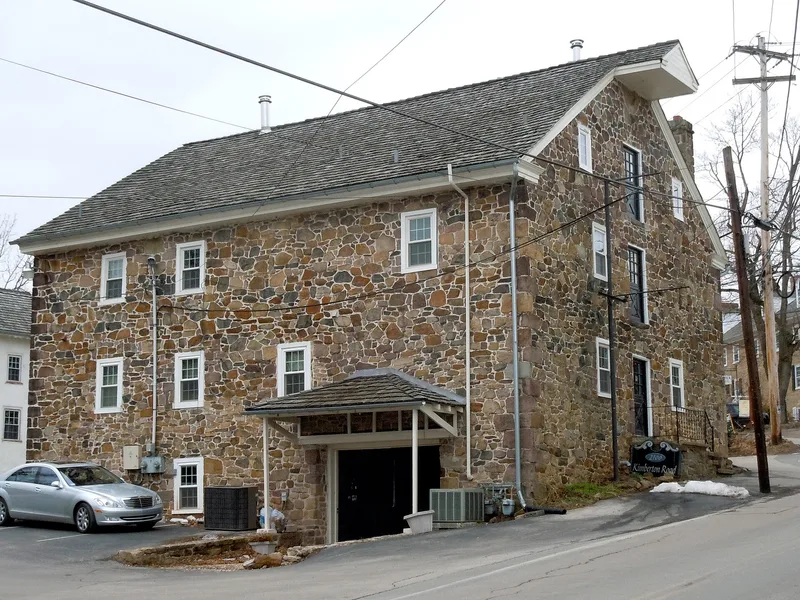
Kimberton is a village district at the crossroads of Kimberton and Hare's Hill roads in Chester County, Pennsylvania, with buildings dating from about 1770 to the early twentieth century. Its earliest structures include the 1768 Black Bear Tavern, the stone French Creek Boarding School begun around 1787, and the 1796 Chrisman Mill, all built of local stone in a vernacular manner. Emmor Kimber, a Quaker educator who arrived in 1817, ran the boarding school, owned much of the crossroads, operated a general store, and served as the local postmaster, which gave the village its name. The district is significant for its record of local commerce, including mills, taverns, and stagecoach service. After the Pickering Valley Railroad reached the village in 1871, its eastern end grew around a station and milk receiving station. The village retains excellent integrity, with few demolitions over the past century and a predominantly domestic scale.
Machine-generated summary. This summary was generated by a language model from the official nomination document and has not been reviewed line by line by an editor. It may contain errors. Check the source document before relying on any detail. Source: nomination document (PDF) · catalog entry. Generated October 2026 (model claude-haiku-5-5, prompt v1.1-2026-10-29).
| Period of significance | 1768 - 1920 |
|---|---|
| Styles | Colonial vernacular, with Queen Anne, Arts and Crafts-influenced foursquare houses, and Georgian-derived forms |
| Areas of significance | Commerce, Transportation, Education, Architecture |
| Acreage | 44.3 |
| Boundary source | NPS cultural-resource GIS polygon |
| Full listing page | Kimberton Historic District (Boundary Increase) (property record) |
What listing means for this property
This is a historic district. Buildings within its boundary are either contributing (they add to the district's significance) or non-contributing. Owners of contributing income-producing buildings can claim the 20% federal rehabilitation tax credit; homeowners should look at state credits. National Register districts impose no design review by themselves; a local historic district ordinance, if one exists, does (the difference explained).
General information, not legal or tax advice. Rules change; confirm with your State Historic Preservation Office or a qualified adviser.