Kennywood Park
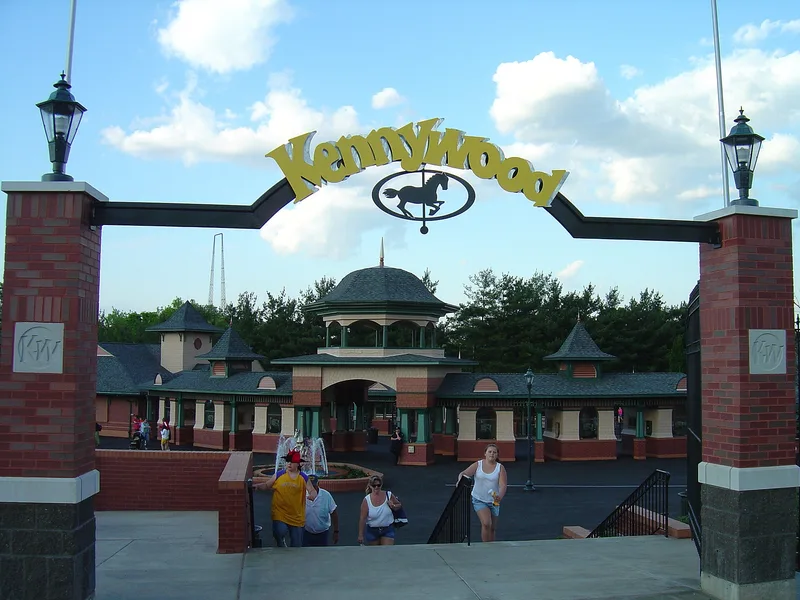

Why it's listed
Kennywood Park occupies about 40 acres on a plateau above the Monongahela River, roughly five miles southeast of Pittsburgh. The Monongahela Street Railway Company began it as a trolley excursion park in 1898, and it opened in 1899 under the first manager, engineer George S. Davidson, whose triangular layout of open-air pavilions around a small man-made lake remains largely intact. The park is regarded as one of the few survivors of the trolley park movement that flourished in the early 1900s in southwestern Pennsylvania. Its significance rests on its surviving rides: John A. Miller's Racer and Jack Rabbit coasters, the 1927 Dentzel carousel with 64 horses, the 1927 Old Mill, and the 1936 Noah's Ark. The nomination treats these as rare examples of early amusement technology, and the park as a record of how American amusement parks adapted to changing trends over several decades.
Machine-generated summary. This summary was generated by a language model from the official nomination document and has not been reviewed line by line by an editor. It may contain errors. Check the source document before relying on any detail. Source: nomination document (PDF) · catalog entry. Generated October 2026 (model claude-haiku-5-5, prompt v1.1-2026-10-29).
| Period of significance | 1898-99 |
|---|---|
| Areas of significance | Entertainment/Recreation |
| Acreage | 40 |
| Boundary source | NPS cultural-resource GIS polygon |
| Full listing page | Kennywood Park (property record) |
What listing means for this property
This is a historic district. Buildings within its boundary are either contributing (they add to the district's significance) or non-contributing. Owners of contributing income-producing buildings can claim the 20% federal rehabilitation tax credit; homeowners should look at state credits. National Register districts impose no design review by themselves; a local historic district ordinance, if one exists, does (the difference explained).
General information, not legal or tax advice. Rules change; confirm with your State Historic Preservation Office or a qualified adviser.